
Featured Heating & Forced-Air Assembly Components
Precision-engineered cast heating jackets, high-density elements, high-temperature blower fans, and thermal isolation modules built directly to customer blueprints and international engineering norms.
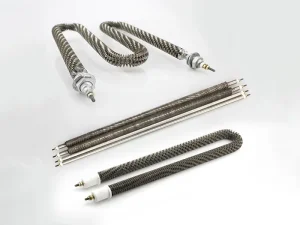
China High density heating element Manufacturers, Factories
View Details & CAD Specs
High-Quality Portable Ceramic Heaters for Industry - Efficient Heating Solutions
View Details & CAD Specs
High-Quality Portable Ceramic Heaters for Industry - Reliable Temperature Control
View Details & CAD Specs
China Safe and Durable Mica Heaters Factory, Factories
View Details & CAD Specs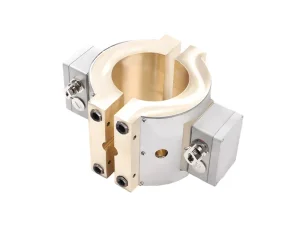
CE Certification Cast Aluminum/Copper Heater Manufacturer, Exporter
View Details & CAD Specs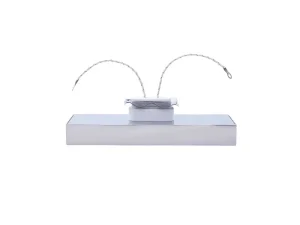
Best Infrared Ceramic Heaters for Efficient Heating Manufacturers, Exporters
View Details & CAD Specs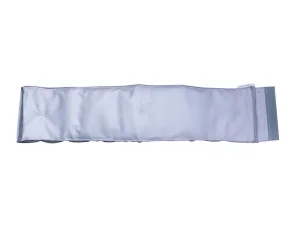
Best Durable Heat Insulation Covers Manufacturer, Exporters
View Details & CAD Specs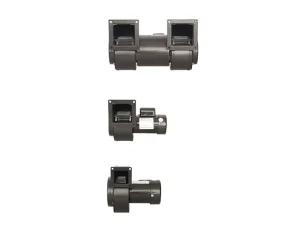
CE Certification Fan Manufacturer, Factory
View Details & CAD SpecsAerodynamic Forced-Air Convective Cooling in Industrial Heating Systems
In modern precision processing—particularly high-shear thermoplastic extrusion, PVC-O biaxial orientation, and composite vulcanization—the heating assembly is only half of the thermal equation. High-shear screw rotation induces substantial kinetic mechanical shear, generating uncontrolled exothermal energy. Without engineered forced-air blowers and aerodynamically optimized shrouds, temperature overshoot degrades melt index, introduces polymer chain scission, and causes severe product wall-thickness irregularities.
Dynamic Boundary Layer Disruption
Standard natural convection suffers from a stagnant insulating laminar boundary air film over cylindrical cast-in heaters. Our forced-air blowers deliver high-velocity, high-static pressure laminar airflow through slotted perimeter baffles, inducing continuous micro-turbulences that disrupt the stagnant boundary layer and elevate convective heat transfer coefficients (h) from 15 W/(m²·K) to upwards of 120 W/(m²·K).
Elimination of Thermal Hysteresis
Traditional electric band heaters without integrated forced-air cooling exhibit sluggish cooling curves, causing substantial temperature hysteresis (±15°C overshoot). By pairing cast aluminum or copper heaters with high-temperature squirrel-cage or forward-curved centrifugal blowers, barrel temperature stabilization is achieved within a razor-thin window of ±0.5°C under continuous fluctuating load conditions.
Zero-Thermal-Shock Degradation
Unlike water cooling channels which provoke aggressive quenching, severe metal stress cracking, scale buildup, and barrel embrittlement, forced-air cooling delivers gradual, uniform volumetric heat extraction. This gentler thermodynamic cycle preserves metallurgical integrity and extends heating element life beyond 50,000 duty hours without scale clogging risks.
Engineering Truth: The Integration of Conduction and Forced Convection
A forced-air blower cannot be sized in isolation. Heating wattage density (W/cm²), aluminum alloy casting conductivity, radial fin geometry, shroud plenum static pressure drop (ΔP), and blower volumetric CFM must be computed as a synchronized thermodynamic ecosystem. Kangpu's 40-year historical dataset enables precise matching of impeller pitch and air shroud vent arrays to barrel surface zones.
Targeted Application Scenarios & Localized Operating Conditions
Across global industrial manufacturing plants, operating parameters vary drastically. Below are the specialized field configurations engineered by Kangpu (Yancheng Laier Heating Technology Co., Ltd.) to solve extreme thermal bottlenecks.
1. High-Output Twin-Screw Compounding
Operating Challenge: Highly filled engineering masterbatches (CaCO3, talc, glass-fiber reinforced PA66) induce intense frictional heat spikes in degassing and mixing zones. Water-jacket cooling frequently calcifies and over-chills the melt skin.
Kangpu Solution: Segmented cast aluminum heaters fitted with tangential forward-curved 220V/380V centrifugal blowers. Air distribution jackets feature precision punched discharge louvers that direct cool air uniformly around the finned cast perimeter without disturbing melt homogeneity.
2. PVC-O Molecular Orientation Pipe Extrusion
Operating Challenge: Processing molecularly oriented PVC requires an exceptionally narrow viscoelastic temperature zone (typically ±1°C). Any heat drift causes pipe wall thinning or catastrophic hoop burst under pressure testing.
Kangpu Solution: Integration of our patented cooling-heating combination system. High-density mica and ceramic elements provide rapid heating ramp-up, while variable-frequency driven (VFD) blowers dynamically modulate air cfm based on thermocouple feedback, maintaining absolute thermal stability.
3. Multi-Layer Blown Film Co-Extrusion
Operating Challenge: Multi-layer barrier films (EVOH/PE/PA) utilize sensitive resins that degrade and yellow when subjected to thermal spikes. Factory space is restricted, necessitating low-profile cooling modules.
Kangpu Solution: Low-decibel, high-static compact blower assemblies integrated directly into thermally insulated outer shells. Outer surface temperatures are kept below 50°C, lowering ambient workshop air conditioning loads by up to 35% and protecting machine operators.
Technical Roadmap: Aerodynamic Computational Fluid Dynamics (CFD) & Brushless EC Integration
As industrial plants embrace Industry 4.0 and digital manufacturing twins, the humble blower heater evolves from an electro-mechanical on/off device into a smart, continuously modulated cyber-physical actuator.
CFD-Optimized Air Cavity Geometries
Traditional sheet metal shrouds suffer from internal air recirculating eddies and dead cooling zones opposite the blower inlet. Kangpu utilizes ANSYS Fluent computational fluid dynamics to sculpt internal shroud volutes, balancing static air pressure circumferentially and ensuring temperature differentials across the barrel diameter remain under 1.2°C.
EC Brushless Motor Modernization
Replacing traditional AC shaded-pole blower motors with Electronically Commutated (EC) brushless DC drives. EC motors operate at over 80% electrical efficiency (compared to 30% for shaded-pole), provide seamless 0-10V/4-20mA PWM speed control, run significantly cooler, and reduce plant acoustic noise below 62 dB(A).
Predictive IoT Diagnostic Sensing
Embedded dual thermocouple wells and vibration-tolerant vibration monitors directly transmit thermal inertia telemetry to central PLCs via IO-Link or Modbus TCP. Early warning algorithms detect fan bearing degradation, air filter clogging, or element resistance shift weeks before catastrophic field failure occurs.
Comprehensive System Engineering Specifications
| System Parameter | Standard Commercial Grade | Kangpu Heavy-Duty Engineered Standard | Engineering Advantage & Value |
|---|---|---|---|
| Blower Housing & Impeller | Standard stamped mild steel / zinc coated | 304/316 Stainless Steel or Die-Cast Aluminum alloy | Zero corrosion under corrosive off-gassing (e.g. rigid PVC, fluoropolymers) |
| Blower Motor Rating | Class B insulation (130°C limit), sleeve bearing | Class H insulation (180°C limit), dual ball bearings | Withstands extreme ambient radiant heat from 400°C barrel surfaces |
| Heating Element Sheath | Iron or generic Incoloy 840 tubing | Incoloy 800/840 or Seamless SS321 / Pure Ceramic Block | Prevents premature sheath oxidation and dielectric breakdown |
| Watt Density Range | Up to 3.5 W/cm² (uncontrolled hot spots) | Optimized 4.5 – 6.5 W/cm² (computational balancing) | 40% faster warm-up cycles without filament burnout |
| Thermal Insulation Shroud | Single-layer sheet metal (exterior > 110°C) | Ceramic fiber wool vacuum barrier (exterior < 50°C) | Meets OSHA touch-safe workplace standards, lowers energy bills |
| Warranty & Traceability | 6 to 12 months with limited parts replacement | 5-Year Manufacturer Warranty with batch heat-code tracking | Lowest total cost of ownership (TCO) across machinery lifecycle |
China Supply Chain Resilience, Industrial Cluster Economics & Factory Capabilities
Located in Yancheng, Jiangsu Province—the epicenter of China's industrial electrical heating manufacturing cluster—Yancheng Laier Heating Technology Co., Ltd. (Kangpu) provides distinct competitive advantages in metallurgical sourcing, rapid tooling, and high-throughput production resilience.
Dedicated Foundry & Casting
In-house aluminum and brass casting workshops eliminate reliance on third-party foundries. Raw ingot melt chemistry (ZL101A / ZL104) is verified via optical emission spectrometers to guarantee uniform thermal conductivity and zero subsurface porosity.
7-Stage Precision Customization
We execute a rigorous 7-stage workflow: Industrial ID Design → Engineering Specification → Real-Mold Tooling Sample → Client Verification → Sample Refinement → Rigorous Dielectric/Thermal Bench Testing → Scaled Mass Production.
Cluster Sourcing Velocity
Key sub-components—such as high-temperature mica sheet, steatite ceramics, Swedish Kanthal resistance wire, and specialized backward-inclined blower impellers—are sourced within a 50 km logistics radius, slashing prototyping cycles to just 5 business days.
Rigorous Quality Quarantine
Every blower heating jacket passes mandatory 1,500V high-potential dielectric breakdown tests, insulation resistance checks (>100 MΩ at 500V DC), hot-state leakage tests, and dynamic impeller balance testing (ISO 1940 Grade G2.5) prior to seaworthy crating.
Global Industrial Landscape: Electrification, TCO, and Decarbonization
Industrial heat accounts for nearly 20% of global industrial carbon emissions. Process manufacturers worldwide—from North American compounding facilities to European masterbatch processors and Southeast Asian recycling plants—are actively retiring inefficient gas-fired infrared or water-cooled systems in favor of energy-conserving, fully electric forced-air cooling systems.
Total Cost of Ownership (TCO) Economics
When engineering procurement teams evaluate heating and cooling equipment, initial unit purchase price accounts for only 8% of the 5-year lifecycle cost; electrical consumption represents 84%, and downtime maintenance accounts for 8%. By integrating high-efficiency ceramic insulating band heaters or cast heaters combined with insulated forced-air plenums, thermal radiation losses are cut by 30% to 45%. A typical 90mm extruder running 6,000 hours annually can recover the entire replacement cost in under 9 months of electricity savings.
Environmental Compliance & Factory Electrification
Strict ESG guidelines and carbon taxation frameworks (such as the EU Carbon Border Adjustment Mechanism - CBAM) are compelling machinery builders to eliminate direct fossil combustion on the factory floor. Our zero-emission forced-air heating assemblies, electromagnetic induction systems, and clean electromagnetic steam boilers run entirely on renewable electric grid power, generating zero localized NOx, SOx, or CO2 emissions while delivering unmatched process repeatability.
Localized Support, Certifications & 5-Year Factory Warranty Guarantee
Exporting industrial heating hardware to over 100 countries necessitates uncompromising alignment with international safety standards, electrical codes, and cross-border logistical protections.
International Safety Harmonization
Every blower, junction box, terminal post, and resistance heating core is certified to European CE directives (Low Voltage Directive 2014/35/EU, EMC Directive 2014/30/EU), with available UL-499 and CSA C22.2 No. 72 compliance engineering for North American machine builders. Explosion-proof ATEX/IECEx variants are produced for hazardous dust and chemical solvent zones.
Seamless Electrical Retrofits
We tailor motor voltages and power frequencies to target plant grid standards without the need for step-down transformers: 380V/400V/415V 50Hz (Europe, Asia, Middle East), 460V/480V 60Hz (USA, Canada, Mexico), or 200V/220V 50/60Hz (Japan, Taiwan). Terminal boxes are configured with IP65 moisture protection and armored ceramic terminal blocks.
5-Year Batch Traceability Warranty
While generic trading companies provide zero warranty once containers depart port, Kangpu protects buyers with an industry-leading 5-year warranty. Every unit is laser-etched with a unique production batch QR code linking directly to its raw material metallurgical certificate, wire tension log, and inspector sign-off.
Frequently Asked Technical Questions: Forced-Air Heating & Cooling Systems
Direct answers to core thermal engineering, installation, and procurement questions encountered by plant maintenance supervisors and equipment manufacturers.
How does a forced-air cooled heating jacket compare against liquid (water/oil) cooling jackets on extruders?
Air-cooled heating systems offer distinct advantages: they eliminate scaling, calcification, internal corrosion, and leak hazards associated with closed-loop water pipes. Liquid cooling frequently provokes "thermal shock," stripping heat too quickly and causing localized polymer freezing or cylinder stress cracking. Forced-air cooling extracts heat smoothly and uniformly, is practically maintenance-free, and avoids costly water treatment and piping manifolds.
What criteria determine whether to use cast aluminum vs cast copper/bronze in an air-cooled system?
Cast aluminum (rated up to 350°C - 400°C) is the industry workhorse: it offers exceptional thermal conductivity (~160 W/m·K), low rotational mass, and economical cost. For high-temperature engineering plastics like PEEK, PTFE, PPS, or polysulfone requiring process temperatures between 400°C and 650°C, cast brass or bronze is mandatory because aluminum approaches its softening point. Kangpu manufactures both options to customer drawings.
Can Kangpu engineer replacement forced-air blowers and shrouds for non-standard or legacy European/American machinery?
Yes. Custom OEM replacement is our core specialty since 1986. You can provide a physical sample, an engineering blueprint, or simply the barrel diameter, existing zone length, voltage, and thermocouple position. Our design team will draft a detailed 3D CAD drawing, optimize mounting clearances, and deliver a sample built on real production tooling for direct line verification before volume run.
How do you ensure blower motors do not fail under intense radiant heat from 350°C barrels?
Our blower designs isolate the motor from the direct radiant path. We employ stainless steel heat sinks, thermal break standoffs, high-temperature Class H insulated motor windings, and specialized sealed bearings packed with Krytox fluorinated grease. Additionally, reflective stainless steel baffles deflect radiant IR energy away from the blower intake shroud.
What is Kangpu's 5-Year After-Sales Warranty protocol and how is it claimed internationally?
Every component is cataloged with a unique laser-engraved batch serial number. If an abnormal electrical open circuit, premature burnout, or casting defect occurs within 5 years, the customer submits the serial code along with operational log photos. Our engineering department inspects the batch record, identifies root cause, and dispatches rapid replacement units via expedited international air freight at zero equipment cost to the client.
Expanded Industrial Thermal, Induction & HVAC Heating Portfolio
Discover our auxiliary industrial heaters, explosion-proof systems, electromagnetic steam boilers, and temperature sensor suites engineered for comprehensive plant electrification.
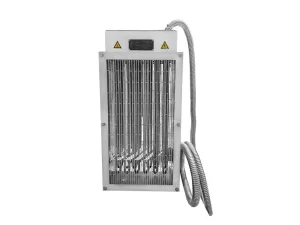
CE Certification Efficient Air Duct Heaters for HVAC Manufacturer, Factory
View Details & CAD Specs
China Portable Ceramic Heaters for Industry Manufacturers, Exporter
View Details & CAD Specs
CE Certification Explosion Proof Electric Heater Exporter, Factory
View Details & CAD Specs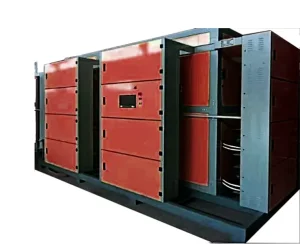
High-Quality Electromagnetic steam boiler Manufacturers, Factories
View Details & CAD Specs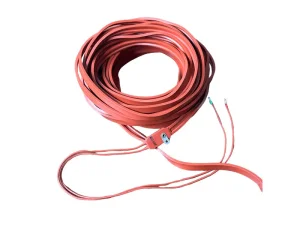
CE Certification Flexible Heaters for Custom Applications Manufacturer, Exporter
View Details & CAD Specs
High-Quality Thermocouple Exporter, Factory
View Details & CAD Specs
CE Certification Electromagnetic induction heater Manufacturer, Exporter
View Details & CAD Specs
China Portable Ceramic Heaters from China Suppliers: Efficient Heating Solutions
View Details & CAD SpecsRequest Custom Engineering Review & 3D Modeling
Partner directly with Yancheng Laier Heating Technology Co., Ltd. (Kangpu). Submit your CAD drawings, machine barrel dimensions, or process thermal requirements to receive a comprehensive thermodynamic proposal, CFM calculation, and real-mold production sample quote within 24 hours.