
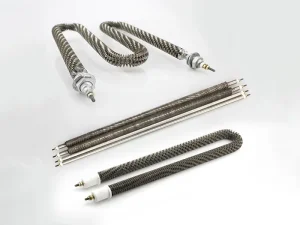
Original OEM Equipment Portfolio
Featured Precision Heating & Thermal Instrumentation
Engineered by Kangpu Heater (Yancheng Laier Heating Technology Co., Ltd.) to interface seamlessly with industrial thermocouple and thermistor feedback control loops across global plastics, chemical, and metallurgy lines.

High-Quality (Hot-runner)Spring heater/Coil heater Manufacturers, Factory
View Specifications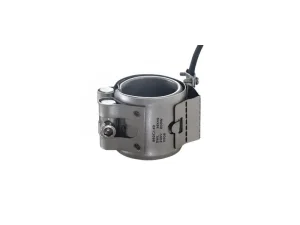
China Safe and Durable Mica Heaters Factory, Factories
View Specifications
High-Quality Thermocouple Exporter, Factory
View Specifications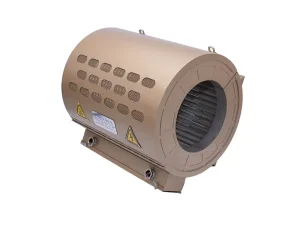
CE Certification Nano infrared electric band heater Manufacturer, Manufacturers
View Specifications
CE Certification Flexible Heaters for Custom Applications Manufacturer, Exporter
View Specifications
High-Quality Cleaning furnace Manufacturer, Exporter
View Specifications
High-Quality Electromagnetic steam boiler Manufacturers, Factories
View Specifications40+
Years Manufacturing Excellence (Est. 1986)
100+
Global Export Countries Reached
5,000+
Industrial Process Clients Served
5-Year
After-Sales Engineering Warranty
Sensor Engineering & Physics Analysis
Fundamental Physics: Seebeck Thermocouples vs. Semiconducting Thermistors
Selecting the definitive thermal sensor requires an in-depth understanding of solid-state semiconductor dynamics versus dissimilar metal thermoelectric phenomenology. When engineering thermal loops for extrusion lines, injection nozzles, oil boilers, or laboratory reactors, precision and durability are governed by the underlying physics of measurement.
| Evaluation Parameter | Industrial Thermocouple (TC) | Negative/Positive Thermistor (NTC/PTC) | Kangpu Application Guideline |
|---|---|---|---|
| Physical Operating Principle | Seebeck Effect: Electromotive force (ΔV) generated across junctions of dissimilar metallic conductors under thermal gradients. | Bulk Semiconductor Resistivity (ΔR): Thermally excited electron transitions changing resistance across metal-oxide ceramics. | Thermocouples are ideal for high heat generation; thermistors excel in localized low-to-medium ambient checks. |
| Measurable Temperature Range | -200°C to +1,800°C (Base & Noble Metal types: K, J, N, T, S, R, B). | -50°C to +150°C (Specialized glass-encapsulated variants up to +300°C). | Use Kangpu K/J-Type thermocouples for ceramic/cast barrel zones; use NTC for chilled plumbing loops. |
| Sensitivity & Output Characteristic | Low sensitivity: 10 to 40 μV/°C. Highly linear curve requiring cold-junction compensation (CJC). | Ultra-high sensitivity: 3% to 5% resistance shift per °C. Steeply non-linear exponential (Steinhart-Hart equation). | Thermistors catch rapid 0.01°C fluctuations in lab equipment; thermocouples handle wide spans across heater jackets. |
| Mechanical Robustness & Sheathing | Exceptional: Solid metal junctions protected by 316SS, Inconel 600, or ceramic protection tubes. Immune to vibration. | Moderate to Fragile: Sintered metal-oxide beads sealed in glass or epoxy. Vulnerable to shock and high mechanical stress. | Heavy industrial extruders and cast-in heaters demand sheathed thermocouples with spring-loaded bayonet adapters. |
| Lead Resistance & Cable Runs | Prone to parasitic EMF if extension leads differ from sensor metals. Requires matched thermocouple extension wires. | Standard copper wiring acceptable; high base resistance (10kΩ) minimizes parasitic lead-wire resistance degradation. | For long factory telemetry lines to centralized SCADA cabinets, run high-resistance thermistors or 4-20mA TC transmitters. |
Thermal Response Dynamics
Unshielded exposed-junction thermocouples feature response times under 10 milliseconds, matching bead thermistors. However, when protected with thick mineral insulated (MI) armor against corrosive melt pressures, the heat soak inertia increases thermal time constants by 1.2 to 3.5 seconds.
Linearization & DSP Protocols
While thermocouples exhibit predictable Seebeck coefficients requiring cold-junction ice-point references, modern microcontroller-driven edge controllers linearize NTC thermistor polynomial responses instantly via embedded Steinhart-Hart lookup tables, unlocking sub-millikelvin precision.
Aging & Long-Term Drift Stability
Thermistors maintain baseline drift stability within ±0.02°C annually under low temperatures. Conversely, base-metal thermocouples (like Type K) undergo grain growth and selective oxidation of chromel/alumel wires at sustained heats exceeding 800°C, requiring scheduled recalibration protocols.
Localized Field Implementations
Precision Integration in Modern Industrial Environments
Temperature sensor selection dictates operational safety, yield ratios, and thermal efficiency. Below is how thermocouples and thermistors are integrated across key processing sectors worldwide.
Plastic Extrusion & Injection Molding
Extruder barrels equipped with Kangpu Ceramic Band Heaters and Cast Aluminum jackets generate localized temperatures between 180°C and 420°C under high mechanical shear. Spring-loaded Type J and Type K bayonet thermocouples are universally deployed here for their immune structural resilience to vibrational wear and barrel contact reliability.
Biomedical & Scientific Incubators
In clinical thermocyclers, hemodialysis heating jackets, and incubator chambers operating between 30°C and 45°C, an error of 0.2°C can destroy active cultures. NTC thermistors are standard here, wired directly into micro-PID circuits to deliver steady 0.05°C regulation paired with low-watt flexible silicone heating pads.
Industrial Thermal Oil Furnaces & Boilers
Operating environments utilizing Kangpu electromagnetic steam boilers and high-temperature thermal fluid heat exchangers demand Type K or Type N thermocouples protected by sealed 316 stainless steel or ceramic thermowells. They deliver stable telemetry up to 650°C without degradation from vaporized heat-transfer media.
China Manufacturing & Global Supply Chain
Supply Chain Resilience: The Yancheng Industrial Heating Advantage
Sourcing industrial heating elements and thermal feedback instruments directly from specialized manufacturing clusters in Jiangsu offers unmatched production scale, vertical raw material integration, and tight engineering tolerances.
Direct Alloy Smelting Access
Close proximity to certified Class-1 thermoelectric alloy foundries guarantees verified purity in Chromel, Alumel, and Constantan wire rods, eliminating batch variations and cold-junction offset errors.
Dedicated Tooling & Mold Centers
Kangpu operates rapid-turnaround CNC tooling facilities. Custom casting dies for aluminum heating blocks and complex thermowell sleeves shift from CAD verification to operational validation within days.
Rigorous QA Metrology
Every batch passes automated dielectric insulation resistance tests, helium leak checks across welded sheaths, and laser calibration against secondary standard platinum sensors (PT100/ITS-90).
Optimized Export Logistics
Direct access to the Shanghai and Ningbo logistics corridors enables secure seafreight container consolidation and express international air delivery across Europe, the Americas, and Southeast Asia.
Innovation & Future Outlook
Next-Generation Thermal Sensing: Edge AI and Hybrid Sensor Networks
Industrial automation is advancing rapidly toward autonomous feedback loops. Thermal instrumentation is moving beyond passive analog probes toward intelligent sensing systems integrated with self-calibrating machine learning controllers.
Predictive Thermometry Drift Diagnostics
Emerging smart sensor heads monitor junction degradation and thermocouple loop resistance continuously. Machine learning algorithms flag EMF drift, grain degradation, or moisture penetration before process runaway occurs, eliminating unexpected line shutdowns.
Hybrid TC-NTC Embedded Arrays
Modern extruder barrel jackets utilize multi-node arrays combining fast-response surface NTC thermistors with deep-well Type K thermocouples. This hybrid design tracks melt wall shear heat in real time while monitoring deep barrel core temperatures simultaneously.
Direct IO-Link & Industrial IoT Integration
Modern sensor heads now bypass sensitive millivolt analog cabling by integrating directly with IO-Link digital buses. By converting thermal signals right at the sensor probe, signal degradation from factory electrical noise (EMI) is eliminated.
Global Certification & Compliance Protocols
International Standards & Quality Traceability
Reliability is non-negotiable in critical process heating. Kangpu products comply with strict global safety, metrological, and material environmental standards to guarantee uninterrupted performance worldwide.
IEC 60584 & ASTM E230 Calibration
All industrial thermocouples are calibrated to international tolerance classes (Class 1 / Special Limits of Error), ensuring interchangeability with existing OEM PID controllers worldwide without field recalibration.
CE Low Voltage & RoHS Compliance
Our electric heating elements, nano-infrared band heaters, and cast units hold full CE certification under the Low Voltage Directive (LVD 2014/35/EU). Mineral insulation and lead terminations meet strict RoHS and REACH environmental guidelines.
End-to-End Batch Traceability
Backed by our 5-year warranty, every heating element and sensor carries a unique laser-etched batch code. This enables complete tracking from raw material batches to furnace winding and final potting logs.
Procurement & Technical Support
Frequently Asked Technical Questions (FAQ)
Quick answers to common questions about thermal sensor selection, customized heater manufacturing, and direct factory export protocols.
Can Kangpu manufacture custom thermocouples and band heaters to our engineering drawings?
Yes. Custom fabrication accounts for over 85% of our daily production. Simply share your 2D/3D CAD models, hand sketches, or machine specifications. Our engineers will verify sheath length, diameter, bayonet cap dimensions, cold-junction terminations, lead options, voltage, and watt density before sample manufacturing.
How do I choose between a Type K and Type J thermocouple for my plastics processing barrel?
Type J (Iron/Constantan) offers high sensitivity (~55 μV/°C) within typical plastics ranges (up to 750°C) and performs reliably in reducing atmospheres. Type K (Chromel/Alumel) operates up to 1,250°C and resists oxidation effectively. For standard extrusion under 400°C, Type J is widely specified; for high-temperature resins like PEEK, fluoropolymers, or ceramic bands, Type K is recommended.
What makes thermistors less suitable for high-temperature heater control?
Standard NTC thermistors rely on metal-oxide semiconductor ceramics that experience irreversible physical changes above 150°C to 300°C, causing permanent calibration drift. In addition, their exponential resistance curve flattens significantly at higher heats, reducing sensitivity precisely when tight control is needed. Thermocouples remain the industry standard for high-temperature barrel heating.
What warranty and post-purchase engineering protection does Kangpu provide?
We provide a 5-year after-sales warranty on our industrial electric heating products. Every product carries a laser-marked identifier tracing back to its raw material heat lot and assembly technician, ensuring issues can be tracked to the source rather than simply replacing parts.
What is the standard procedure and lead time for evaluation samples?
Our 7-stage sampling cycle moves from initial ID design review and specification approval to real production molds and testing. Evaluation samples are produced within 3 to 7 working days and shipped via DHL/FedEx/UPS for customer machine fit testing before releasing full production runs.
Complete Export Catalog
Advanced Industrial Ceramic Heaters & Cast Systems
Explore additional high-performance solutions from Kangpu's manufacturing line. Each heater is fully customizable for inner diameter, voltage, wattage, terminal layouts, and integrated sensor sleeves.

China Efficient Portable Ceramic Heaters for Industry | China Suppliers & Factory Exporters, Factories
View Specifications
Best Efficient Portable Ceramic Heaters from China Suppliers - Ideal for Industrial Heating in Factories Manufacturers, Exporters
View Specifications
CE Certification Cast Aluminum/Copper Heater Manufacturer, Exporter
View Specifications
China Portable Ceramic Heaters for Industry Manufacturers, Exporter
View Specifications
CE Certification Electromagnetic induction heater Manufacturer, Exporter
View Specifications
High-Quality Portable Ceramic Heaters for Industry - Reliable Heating Solutions from China Suppliers and Factory Manufacturers, Factory
View Specifications
High-Quality Portable Ceramic Heaters for Industry - Efficient Heating Solutions from China Suppliers and Factory Exporter, Exporters
View Specifications