
Featured Product Portfolio (Series I)
Precision-manufactured electric industrial heaters optimized for high thermal transfer efficiency, extreme durability, and exact barrel fit.

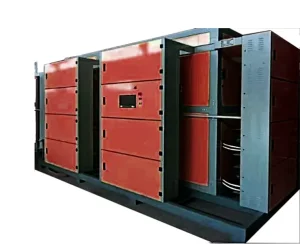


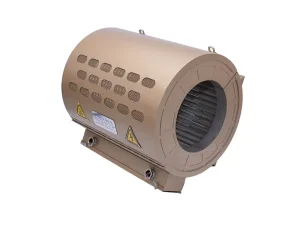
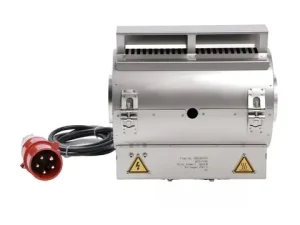
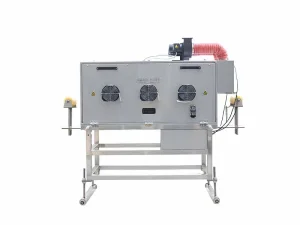
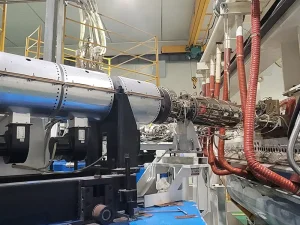
Executive Technical Report: The Science of High-Quality Band Heating
An engineering treatise on conduction mechanics, ceramic block design, dielectric insulation strength, and thermal flux distribution.
In modern polymer processing, chemical engineering, and industrial thermal management, selecting a High-Quality Band Heater Manufacturer & Factory is not merely a purchasing decision—it is an integral determinant of process stability, energy cost optimization, and machine operational lifecycle. Industrial band heaters function as specialized conductive heating elements wrapped tightly around cylindrical surfaces such as extruder barrels, injection molding nozzles, and processing pipelines.
The operational mechanism relies on precise electric resistance heating, primarily utilizing high-purity Nickel-Chromium (Ni80Cr20) alloy resistance wires. When electrical current passes through the resistance element, Joulean heat is generated and transferred via conduction through a dielectric insulating medium (such as high-grade phlogopite mica or steatite ceramic blocks) directly into the metallic barrel wall. Achieving uniform heat distribution without localized overheating ("hot spots") requires rigorous manufacturing precision, optimal watt-density matching, and strict clamping tolerances.
Ceramic Band Heaters
Designed for elevated temperatures up to 700°C (1292°F). Steatite ceramic tiles house Ni80Cr20 coils, supported by an outer stainless steel sheath with built-in ceramic fiber insulation layers to minimize ambient heat radiation by up to 25%.
Mica Band Heaters
Ultra-compact construction for operating temperatures up to 350°C (662°F). High-dielectric phlogopite mica sheets deliver rapid thermal response and low profile dimensions, ideal for narrow injection nozzles.
Nano Infrared Band Heaters
Next-gen energy-saving thermal technology utilizing high-emissivity directional infrared coating. Converts over 98% of electrical power into directional radiation, yielding energy savings from 30% to 60%.
Cast-In Aluminum / Copper Heaters
Heavy-duty liquid metal casting enclosing tubular heating elements. Provides supreme thermal mass, shock resistance, and integrated liquid/air cooling fins for ultra-precise plastics extrusion control.
Global Industry Trends & Technology Drivers (2025-2030)
Key macroeconomic and technological transformations shaping modern industrial thermal processing equipment worldwide.
1. Decarbonization and Net-Zero Industrial Mandates
Global manufacturing ecosystems are facing strict regulatory pressures to lower carbon footprints (e.g., the EU Energy Efficiency Directive and global ESG compliance standardizations). Heating systems in plastics manufacturing account for approximately 40% to 50% of total electrical energy consumed on extrusion and blow molding floors. Consequently, global buyers are rapidly transitioning away from legacy low-efficiency band heaters to high-efficiency Nano Infrared Band Heaters and insulated Ceramic Band Heaters equipped with aerogel thermal barriers.
2. Transition to Smart Heating: IoT Sensors & AI-Driven Closed Loop Controls
The integration of Industry 4.0 communication protocols (OPC UA, Modbus TCP) into thermal controllers requires band heaters to maintain exceptional thermal response linearity. Modern band heaters manufactured by advanced factories now embed dual-junction K-type or J-type thermocouples directly within the internal element layout to feed real-time temperature data into AI-driven PID algorithms. This prevents thermal overshoot during polymer plasticization, reducing scrap rates in high-precision medical tubing and micro-injection molding.
3. High Watt-Density and Extreme Thermal Durability Demand
As polymer engineering advances toward high-performance thermoplastics (PEEK, PTFE, PPS, and fluoropolymers), processing temperatures frequently exceed 400°C. Standard off-the-shelf mica heaters fail prematurely under these thermal stresses. Premium OEM factories must engineer specialized ceramic matrix heaters backed by Incoloy 800 outer jackets, designed to handle watt densities up to 8 W/cm² without insulation breakdown or wire oxidation.
Industrial Procurement Framework: Technical Selection Matrix
Use this engineering reference guide to select the optimal heater design based on operating parameters, watt density, and mechanical constraints.
| Heater Category | Max Operating Temp | Max Watt Density | Thermal Efficiency | Primary Industrial Applications |
|---|---|---|---|---|
| Mica Band Heater | 350°C (662°F) | 3.5 - 4.5 W/cm² | 75% - 80% | Injection molding nozzles, small blow molding barrels, packaging lines. |
| Ceramic Band Heater | 700°C (1292°F) | 6.0 - 8.0 W/cm² | 85% - 90% | Plastics extruders, pipe manufacturing, sheet extrusion, recycling pelletizers. |
| Nano Infrared Heater | 500°C (932°F) | 5.0 - 7.5 W/cm² | 93% - 98% | Energy-saving machine retrofits, high-output PVC/PE extrusion lines. |
| Cast Aluminum Heater | 380°C (716°F) | 4.0 W/cm² | 82% - 88% | Air-cooled extrusion barrels, film casting dies, rubber vulcanization. |
| Cast Copper / Bronze | 650°C (1202°F) | 7.0 W/cm² | 88% - 92% | High-temperature resin processing, heavy industrial chemical reactors. |
China Industry 4.0: Supply Chain Resilience & Manufacturing Edge
Why Tier-1 global machinery builders partner with advanced manufacturing hubs in Yancheng, Jiangsu, China.
The global industrial heating sector has undergone a structural realignment. Purchasing executives no longer evaluate suppliers solely on piece-part unit cost; rather, they demand complete supply chain resilience, continuous engineering agility, and rigorous quality governance. As China’s premier heating technology hub, Yancheng (Jiangsu Province) combines concentrated raw material ecosystems with state-of-the-art Industry 4.0 automation.
Vertical Integration & Material Traceability
Direct sourcing of high-purity imported MgO powder, Swedish Kanthal resistance wire, and certified 304/316/Incoloy sheet metal ensures strict lot-to-lot consistency and total material compliance (RoHS & REACH).
Automated Precision Manufacturing
Computer-controlled CNC winding machinery guarantees precise resistance turn spacing, eliminating local hot-spots. Automated laser welding ensures hermetically sealed terminal boxes and flawless outer sheathing.
Full Dielectric & Hipot Testing Protocols
Every band heater undergoes 100% automated electrical safety testing: insulation resistance testing (IR > 500MΩ at 1000V DC) and High Potential dielectric breakdown testing (Hipot up to 2000V AC).
Global Market Breakdown & Localized Application Scenarios
Tailored thermal heating solutions engineered for demanding global operating environments.
Localized Industrial Application Case Studies
1. Plastics Extrusion & PVC-O Pipe Lines (Europe & North America): In high-output PVC-O pipe manufacturing plants, precise multi-zone temperature control across long barrels is required to achieve correct molecular orientation. Custom cooling-heating integrated systems featuring cast aluminum heaters with forced air shrouds provide precise heat balance, preventing resin degradation.
2. Micro-Precision Medical Injection Molding (Germany & Japan): Thin-wall medical devices require split-second thermal responsiveness. Sealed mica nozzle band heaters equipped with moisture-resistant stainless steel braided leads and right-angle terminal boxes prevent plastic drool contamination while ensuring consistent melt flow index (MFI).
3. Heavy Chemical & Petrochemical Pipe Tracing (Middle East & South America): Viscous crude oil transport and chemical reactor piping require heavy-duty ceramic band heaters and thermal oil heating boilers with explosion-proof terminal enclosures (ATEX certified) to withstand corrosive ambient atmospheres and high vibration environments.
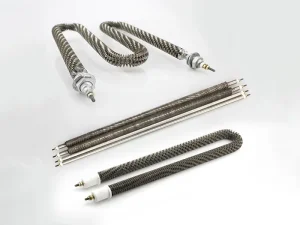
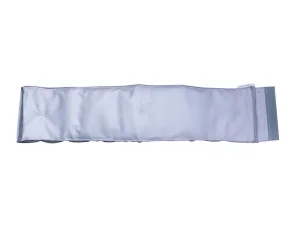
Advanced Thermal Machinery & Specialized Systems (Series II)
Explore our complete catalog of industrial heaters, precise heating/cooling units, and custom OEM thermal processing equipment.



Comprehensive Engineering Q&A & Technical FAQ
Direct technical insights from our senior thermal engineering team regarding customization, installation, and reliability.
1. How do I calculate the correct watt density for my industrial barrel heating application?
Watt density ($W/cm^2$) is calculated using the formula: $$Watt Density = \frac{Total Watts}{\pi \times Inner Diameter (cm) \times Width (cm) - Cutout Areas}$$. For standard mica band heaters on plastic extruders, recommended maximum watt density is 3.5 to 4.5 W/cm². For ceramic band heaters operating above 400°C, watt densities can safely reach 6.0 to 8.0 W/cm² due to the superior thermal conductivity and dielectric strength of steatite ceramic blocks.
2. What are the primary failure modes of industrial band heaters and how does your factory mitigate them?
The two primary premature failure modes are thermal over-temperature burn-out caused by air gaps between the heater sheath and barrel, and lead wire contamination from liquid polymer, oil, or water ingress. We mitigate these through CNC pre-rolling for perfect roundness tolerances, heavy-duty barrel clamping mechanisms (such as barrel-lock draw bolts or spring-loaded straps to absorb thermal expansion), and hermetically sealed moisture-proof terminal boxes with armor cable lead protection.
3. Can your factory build custom band heaters according to non-standard OEM technical drawings?
Yes, customized OEM manufacturing is our core strength. We follow a strict 7-stage engineering protocol: CAD/ID design review, electrical specification matching, real-mold sample manufacturing, physical sample testing under simulated load conditions, customer verification, and mass production. We can accommodate custom thermocouple holes, irregular shape cutouts, dual-voltage wiring configurations (e.g., 230V/460V 3-Phase), and specialized mounting flanges.
4. What is the practical ROI payback period when upgrading to Nano Infrared Band Heaters?
Retrofitting standard mica or ceramic heaters with Nano Infrared Band Heaters typically yields a 30% to 60% electrical energy reduction. For continuously operating extruders (24/7 production lines), the typical financial payback period ranges between 4 to 8 months depending on local industrial kWh electricity tariffs. Additionally, the reduced ambient heat radiation significantly lowers plant air conditioning and cooling loads.
5. What warranty coverage and quality assurance protocols are provided?
All products manufactured by Kangpu Heater (Yancheng Laier Heating Technology) carry a 5-Year After-Sales Warranty backed by complete lot-number batch traceability. Every single heater element undergoes 100% automated dielectric breakdown insulation testing (Hipot up to 2000V) and resistance precision checks before packaging and global export dispatch.