Featured Industrial Heaters & Energy Systems
Integrated heating, precise temperature regulation, and specialized equipment built according to rigorous global mechanical tolerances.



Macro-Industrial Dynamics: The Role of Cast Aluminum Heating
Engineering perspectives on modern thermal transfer, thermodynamic stabilization, and why high-density foundry casting dominates mission-critical manufacturing globally.
Thermal Equilibrium Engineering
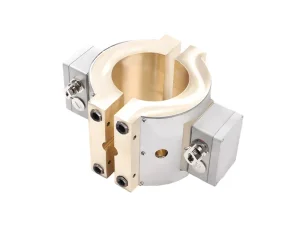
Cast aluminum heaters provide an unparalleled physical matrix that encases nickel-chromium (Ni80Cr20) resistance coils inside dense, void-free Al-Si foundry alloys. This construction eliminates air gaps that cause localized element burnout, delivering exceptionally uniform heat dissipation (operating consistently up to 350°C - 400°C) across continuous polymer melts and chemical dies.
Mechanical Structural Durability
Unlike thin band heaters vulnerable to polymer leakage, plastic degradation, and mechanical shear forces during maintenance, cast aluminum barrel heaters act as heavy-duty pressure shields. The precision-machined inner radiuses provide 360-degree cylindrical contact with extruder barrels, maximizing conduction rates while protecting core electrical components from contaminant ingress.
Integrated Dual-Zone Thermal Loops
Modern extrusion processes handling high-shear engineering polymers (such as PEEK, PTFE, and PVC-O) demand rapid heat removal alongside heat generation. Custom cast-in aluminum bands integrate seamless stainless steel cooling tubes (SS304/SS316) within the same casting, creating dual-action heating/cooling zones controlled with tight algorithmic PID precision.
Technical Parameters: Cast Aluminum vs. Alternative Alloys
Empirical metallurgical metrics for chemical process plant planners, OEM machine designers, and technical procurement directors.
| Performance Specification | Cast Aluminum Heater (Kangpu Standard) | Cast Bronze / Copper Alloy | Standard Ceramic Band |
|---|---|---|---|
| Maximum Working Temperature | 350°C - 400°C (Continuous) | 650°C - 700°C (High-Temp Alloy) | 500°C - 650°C |
| Maximum Watt Density | Up to 4.5 W/cm² (30 W/in²) | Up to 7.0 W/cm² (45 W/in²) | Up to 6.0 W/cm² (38 W/in²) |
| Thermal Conductivity (W/m·K) | 160 - 205 (Fast Response, Uniform) | 300 - 380 (Ultra-High Dissipation) | 1.5 - 2.5 (Insulative Nature) |
| Embedded Cooling Media | Seamless Incoloy / SS316 Tubes (Air or Water) | Heavy-wall Stainless Steel Coils | External Air Shroud Blowers Only |
| Corrosion & Impact Resistance | High density, non-porous sand or gravity die casting | Superior against acidic chemical degradation | Fragile ceramic steatite bricks |
Localized Engineering Support & Certified Supply Chain
Mitigating procurement risks through rigorous multi-jurisdictional compliance, specialized export packaging, and localized engineering validation.
Global Electrical Compliance
Kangpu thermal systems are strictly designed, manufactured, and certified under European CE directives (LVD 2014/35/EU, EMC 2014/30/EU) and follow UL499 insulation safety benchmarks. Megohm insulation tests under 1500V dielectric conditions ensure complete electrical reliability in damp or humid global operational environments.
Precision Export Logistics
Exporting to over 100 countries requires purpose-built packaging solutions. All cast elements are vacuum-sealed with anti-corrosive desiccant wrapping, fitted with protective lead/terminal caps, and housed in ISPM-15 compliant shock-resistant fumigated wooden crates, safeguarding fragile ceramic terminal blocks and precision-ground clamping surfaces.
Dedicated Engineering Support
Direct communication with veteran application engineers eliminates translation gaps. From initial 3D CAD modeling (STEP/IGES files) to verifying terminal box clearance on cramped machine chassis, Kangpu engineers evaluate your thermal profiles and provide full pre-production prototypes before committing to mass die casting.
Industrial Deployment: Where Precision Thermal Control Matters
Delivering reliable heat transfer solutions across polymers, semiconductors, and specialized manufacturing plants.
Twin-Screw Extrusion
Crucial for plastic compounders processing shear-sensitive additives. Cast-in liquid cooling circuits rapidly dissipate friction-generated heat surges, stabilizing polymer melt viscosity and preventing product discoloration.
Blow Molding & Die Heads
Complex contour cast aluminum platens deliver balanced thermal distribution across extrusion heads, eliminating wall-thickness variations in bottles, large drums, and automotive fuel tanks.
Semiconductor Packaging
Flat vacuum chuck cast aluminum heaters deliver ultra-flat (within 0.05mm tolerance) heating surfaces for wafer bonding, epoxy curing, and high-purity PCB laminating presses.
Medical Diagnostic Devices
Custom-shaped miniature cast-in elements provide stable incubation temperatures for clinical analyzers, fluid heating chambers, and sterile sealing bars where thermal drift cannot be tolerated.
Technology Roadmap: Next-Generation Smart Heaters
Kangpu's ongoing R&D directions focused on IoT connectivity, carbon footprint reduction, and advanced materials engineering.
Cast-In Optical Fiber & Thin Thermocouples
Integrating micro-mineral insulated RTD sensors and thin-film fiber sensors directly into the aluminum core adjacent to the resistance coils provides real-time core vs. surface temperature differentials. This data stream directly feeds predictive maintenance algorithms before open-circuit failures occur.
Nano-Ceramic Aerogel Integration
Next-generation cast aluminum bands integrate exterior aerogel backing shells directly into the casting shell. This hybrid architecture lowers external shell touch temperatures below 60°C, lowering radiant ambient heat losses into factory floors by up to 35% without requiring secondary insulation jackets.
Closed-Loop Circular Metallurgy
Committed to net-zero manufacturing objectives, our foundry utilizes 100% recyclable, high-purity aluminum scrap streams that undergo vacuum degassing and ultrasonic filtration, reducing raw material carbon footprints by 42% while matching pristine aerospace casting tensile strengths.
Frequently Asked Questions: Cast Aluminum Heating Systems
Clear answers to frequent engineering, quality assurance, and international shipment inquiries.
What specific advantages make Cast Aluminum Heaters superior to Mica or Ceramic bands?
Cast aluminum heaters provide superior mechanical ruggedness, precise heat distribution across complex geometries, and integrated liquid cooling channels. While mica heaters suit low-wattage, economical tasks and ceramic heaters handle radiant high-temperature duties, cast aluminum offers physical durability against external impacts and thermal uniformity that prevents hot-spot formation across critical polymer extruders.
How does Kangpu ensure zero internal air voids in its cast aluminum foundry?
Kangpu employs precision steel dies combined with vacuum degassing and high-frequency vibro-compaction during the pour. Every production batch undergoes X-ray radiographic checks and dielectric insulation testing to ensure the tubular heating element sits centered within dense, void-free aluminum, preventing internal hot-spots and premature burnouts.
Can Kangpu reverse-engineer legacy or discontinued extruder barrel heaters?
Yes. By providing an existing worn-out sample, 2D blueprints, or 3D CAD files, our engineering department creates identical replacement assemblies. We verify inner diameters, bore alignments for thermocouples, terminal block clearances, and wattage allocations to ensure drop-in operational compatibility with major European, American, and Asian machinery lines.
What cooling options can be incorporated into a cast aluminum heater band?
We provide both air-cooled designs (cast with exterior radial fins to maximize blower airflow) and liquid-cooled systems (featuring seamless stainless steel SS304/SS316 or copper tubing embedded into the casting). Liquid-cooled variants offer high thermal response rates, suitable for exothermic materials like rigid PVC formulations.
What is your typical production lead time for custom-molded samples?
Custom tooling and sample creation typically require 10 to 15 business days through our 7-stage quality gate workflow. Once the physical sample is tested and approved on your machinery, full batch manufacturing typically ships within 3 to 4 weeks depending on order volume and terminal box specifications.
Specialized Industrial Heating Solutions & Auxiliaries
High-density cartridge elements, custom pipeline heaters, flexible surface wraps, and insulation jackets engineered for modern plants.