
Precision Thermal Equipment & Heating Systems
Explore our industrial-grade heating assemblies, from infrared components and duct heaters to integrated extrusion temperature controls.
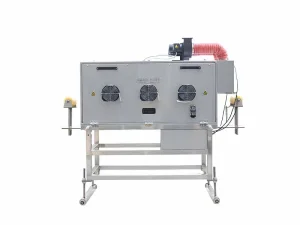
CE Certification PVC-O Ovens for Precision Heating
Learn More & Inquire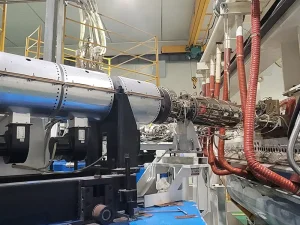
Electromagnetic Induction Heater Exporter
Learn More & Inquire
Efficient Portable Ceramic Heaters for Factories
Learn More & Inquire
Heavy-Duty High-Quality Portable Ceramic Heaters
Learn More & Inquire
CE Certified Industrial Convection Ovens
Learn More & Inquire
Explosion-Proof Electric Heater Factory
Learn More & Inquire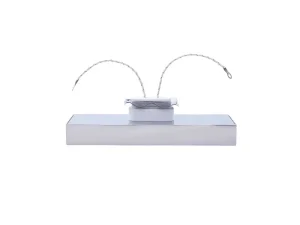
High-Efficiency Infrared Ceramic Heaters
Learn More & Inquire
Engineered Industrial Pipeline Heaters
Learn More & InquireThermodynamic Superiority of Ceramic Fiber Heaters
Analyzing thermal inertia, convective losses, and energy redistribution profiles in high-temperature modern thermal processing environments.
Ultra-Low Thermal Mass
Traditional refractory castables and heavy ceramic insulators absorb significant heat energy before radiating heat outward. Kangpu ceramic fiber matrices reduce thermal inertia by over 72%, allowing ramp rates exceeding 50°C/minute with virtually zero thermal lag during PID cycles.
Embedded Element Geometry
FeCrAl (Kanthal A-1/APM) heating elements are vacuum-formed directly within the high-purity alumina-silica fiber casing. This intimate contact protects the conductor from atmospheric corrosion, stabilizes electrical resistance, and delivers uniform, multi-directional radiant flux.
Superior Thermal Efficiency
By coupling low thermal conductivity (k < 0.08 W/m·K at 800°C) with dense fiber interlocking, our exterior shell temperatures remain exceptionally cool. This minimizes parasitic workshop heat gains and drives operational electrical power consumption down by 30-45%.
Localized High-Impact Application Scenarios
How global industries integrate Kangpu ceramic fiber heating assemblies into demanding precision environments.
Semiconductor Annealing
Installed in horizontal diffusion tubes, rapid thermal processing (RTP) equipment, and wafer curing ovens requiring ultra-clean, particle-free ceramic fiber and ±0.5°C thermal stability across wafer diameters.
Glass Bending & Tempering
Automotive and architectural glass forming lines utilize our flat radiant panels to generate specific infrared wavelengths, penetrating glass uniformly without localized optical distortion or surface scorch marks.
Metrology & Lab Furnaces
Supplying OEM cylindrical heating chambers to leading thermal analysis laboratory equipment manufacturers in Europe and the Americas, meeting strict DIN 17052-1 furnace chamber uniformity classes.
High-Performance Polymers
Integrated barrel jackets for high-temperature engineered plastics like PEEK, PEI, and PTFE extrusion lines, preventing polymer degradation caused by localized temperature overshoot in cast-metal bands.
Technical Roadmap & Next-Gen Heating Horizons
Our long-term R&D trajectory bridges material science breakthroughs with artificial intelligence-driven control loops.
Polycrystalline Mullite Fibers
Transitioning from amorphous aluminosilicate fibers to polycrystalline mullite filaments, boosting maximum continuous service limits from 1200°C to 1450°C with near-zero creep degradation over extended cycles.
Smart Edge Thermometry
Integrating distributed fiber-optic Bragg grating sensors within the fiber block to map 3D temperature gradients across process barrels in real-time, feeding predictive wear models before coil failures occur.
Nano-Composite IR Coatings
Applying high-emissivity ceramic thin-film barriers across radiant surfaces, enhancing thermal radiation yield (emissivity ε > 0.94) across 2–10 μm wavelengths for rapid heat transfer.
Hydrogen & Clean-Grid Optimization
Customizing resistance profiles and ultra-rapid dynamic balancing to pair directly with variable green-hydrogen generators and industrial microgrids without line harmonic pollution.
China Supply Chain Resilience & Production Scale
Operating from our Yancheng production cluster, Kangpu Heater combines raw material vertical integration with advanced robotic automated lines.
Years of Experience
Founded in 1986, our factory spans four decades of deep specialization in industrial process electric heating engineering.
Core Technologies
Holding dozens of utility and invention patents, including air-cooled barrel integration and vacuum-forming die molds.
Export Destinations
Delivering turn-key OEM heaters globally across North America, Europe, Southeast Asia, and Latin American industrial corridors.
Traceable Warranty
Comprehensive quality guarantees supported by full lot traceability, metallurgical certifications, and digital quality archives.
Vertical Integration: From Raw Silica to Precision Heating Units
Unlike light assemblers or import brokers, Yancheng Laier Heating Technology Co., Ltd. controls the complete supply chain loop: high-purity ceramic fiber bulk preparation, automated CNC fiber shaping, in-house resistance wire winding, robotic ceramic slurring, vacuum suction molding, and comprehensive electrical testing. This ensures predictable raw material lead times, insulation consistency, and competitive pricing insulated from international freight disruptions.
Engineering Data & Global Industrial Benchmarks
A granular technical comparison of heating architectures used in plastic processing and industrial furnaces.
| Performance Metric | Kangpu Ceramic Fiber Heaters | Conventional Mica Heaters | Cast-In Aluminum Heaters | Heavy Ceramic Band Heaters |
|---|---|---|---|---|
| Max Operating Temperature | Up to 1250°C (2282°F) | ~350°C - 450°C | ~400°C - 450°C | ~650°C - 750°C |
| Thermal Ramp Rate | Extremely Fast (>50°C/min) | Moderate (15-20°C/min) | Slow (5-10°C/min) | Moderate (10-15°C/min) |
| Thermal Conductivity (Outer) | < 0.08 W/m·K (Insulating) | Moderate Heat Loss | High Dissipation | Moderate (~0.2 W/m·K) |
| Energy Consumption Delta | Baseline (-35% to -45%) | Standard | +15% Thermal Inertia Loss | -10% to -15% |
| Mechanical Mass / Weight | Ultralight (0.2 - 0.4 g/cm³) | Lightweight | Extremely Heavy | Medium Heavy |
| Shock & Cycling Resistance | Superior (Resists Thermal Shock) | Poor (Mica Flakes Over Time) | Good Mechanical Shock | Moderate Ceramic Tile Crazing |
Localized Engineering Support & Global Compliance
Built to satisfy international electrical codes, pressure vessel requirements, and worker safety mandates.
CE, UL & RoHS Harmonization
Every heating unit is engineered and manufactured to conform with CE Low Voltage Directive (LVD) 2014/35/EU, UL 499 heating safety guidelines, and RoHS restricted hazardous substance directives for international compliance.
Regional Electrical Standards
Whether operating on 480V 3-phase delta systems in the United States, 400V 50Hz star grids across the EU, or customized auxiliary 110V/220V setups, our internal resistance distribution and terminal enclosures are tailored for your local infrastructure.
Field Replacement Direct Fit
We work from customer CAD models, field sketches, and machine model numbers (such as KraussMaffei, Battenfeld, Engel, or Husky lines) to guarantee drop-in mechanical and terminal alignment without tooling rework on the factory floor.
Frequently Asked Technical Questions
Get answers to common engineering questions regarding ceramic fiber heaters, customization, and after-sales terms.
What makes Ceramic Fiber Heaters superior to traditional Mica or Ceramic Band Heaters?
Ceramic fiber heaters incorporate a vacuum-formed aluminosilicate insulation body with an embedded resistance wire coil. This yields exceptional thermal insulation, minimal thermal mass, and operating limits up to 1250°C. Compared to mica (limited to 450°C) or standard ceramic band heaters (which rely on heavier, denser tiles), ceramic fiber modules heat and cool substantially faster, dramatically curtail parasitic radiated energy into the facility, and deliver notable energy savings across continuous duty cycles.
Can Kangpu design and manufacture custom shapes, split-cylinders, and flat panels from client drawings?
Yes. Customization represents over 85% of our daily production throughput. Customers can provide 2D/3D drawings (STEP, DWG, PDF) or worn sample components. We optimize the physical geometry, compute watt densities based on operating temperatures, determine clamping mechanisms, and construct a real-mold prototype for mechanical validation before initiating mass production runs.
What is Kangpu's 5-Year After-Sales Warranty policy and quality assurance protocol?
We provide a comprehensive 5-year warranty backed by batch traceability. Every unit manufactured at our Yancheng facility undergoes strict pre-shipment validation: dielectric breakdown testing (hi-pot test at 1500V–2000V), room-temperature resistance tolerance checks within ±5%, and megohmmeter insulation resistance testing (>50 MΩ). If a defect arises from material or manufacturing variance, our batch traceability system isolates the production lot, provides root-cause documentation, and delivers prompt replacements.
How does the 7-stage custom sampling and order approval workflow operate?
Our controlled engineering lifecycle follows seven disciplined stages: (1) Industrial ID and thermal specification design, (2) Electrical customization (voltage, wattage, lead layout), (3) Production-grade real mold fabrication, (4) Customer installation testing and dimensional sign-off, (5) Engineering revisions if clamp or terminal changes are needed, (6) Thermal chamber and dielectric validation testing, and (7) Frozen-specification mass production with customized industrial packaging.
How do Ceramic Fiber Heaters handle thermal expansion and mechanical mounting?
Because aluminosilicate fibers exhibit a near-zero thermal expansion coefficient, thermal shock resistance is exceptional. To securely clamp cylindrical or flat heating modules to processing equipment, we incorporate stainless steel (AISI 304 or 310) exterior structural jackets with heavy-duty spring-loaded latch bolts. This ensures steady contact pressure throughout thermal cycling without cracking or loosening.
Which global regions and industrial sectors do you primarily export to?
We maintain an active customer base across more than 100 countries and 5,000 corporate clients. Primary overseas sectors include plastic extrusion machinery builders (OEM), masterbatch compounders, pipe manufacturing plants (PVC-O orientation ovens), automotive glass processing, semiconductor thermal treatment, and industrial drying and furnace system integrators across Europe, North America, the Middle East, and the Asia-Pacific region.
Integrated Thermal Systems & Sensor Solutions
Explore auxiliary equipment, mica heating systems, duct heaters, and specialized furnace machinery manufactured in our Yancheng facility.

Safe & Durable Industrial Mica Heaters
Learn More & Inquire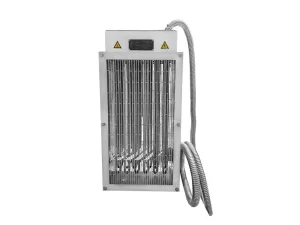
Efficient Air Duct Heaters for HVAC & Drying
Learn More & Inquire
Industrial Portable Ceramic Heating Elements
Learn More & Inquire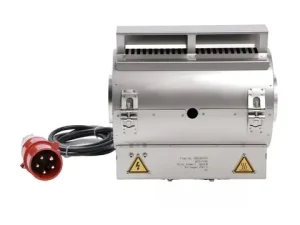
Precise Barrel Cooling & Heating Systems
Learn More & Inquire
Extruder Heating/Cooling Integrated Assemblies
Learn More & Inquire
Thermal Vacuum Cleaning Furnace Systems
Learn More & Inquire
High-Precision Industrial Thermocouples
Learn More & Inquire