Precision Industrial Heating Equipment & Components
Explore our top-tier industrial heating solutions engineered for demanding process parameters, rigorous energy efficiency goals, and long-term operating durability.
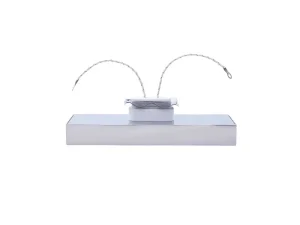

China Efficient Portable Ceramic Heaters for Industry | China Suppliers & Factory Exporters
Request Details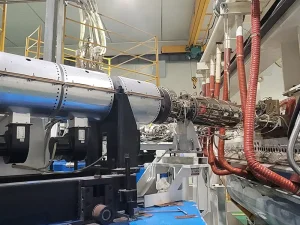
Engineering Architecture: Ceramic Insulated Channel vs. Finned Strip Heaters
An authoritative engineering analysis of thermodynamics, materials metallurgy, dielectric strength, and convective transfer dynamics across process heating configurations.
Ceramic Channel Strip Architecture
Engineered for direct conductive and radiant surface heating, ceramic insulated channel strip heaters employ high-grade steatite ceramic blocks containing helically wound Ni-Cr (80/20) resistance wire. Encased inside corrosion-resistant aluminized steel or 304/316 stainless steel channels, this design sustains sheath temperatures up to 650°C (1200°F) while retaining superior dielectric breakdown resistance under continuous high thermal loads.
Ceramic Finned Strip Mechanics
To optimize forced or natural convection in air and gaseous mediums, aluminized steel or stainless steel fins are mechanically attached under intense pressure along the channel exterior. This drastically magnifies surface dissipation area (often by 300% to 500%), enabling accelerated thermal exchange, lower sheath skin temperatures, higher permissible watt densities, and substantially elongated resistance wire lifespans in air handling ducts and drying tunnels.
Thermal Dynamics & Dielectric Integrity
Industrial strip heaters must withstand thermal cycling without internal element degradation or insulation breakdown. Utilizing premium dense alumina and steatite blocks ensures high thermal conductivity coupled with exceptional insulation resistance (>50MΩ at 1000V DC cold test). Mechanical sheath crimping protects the element core against particulate penetration, vibration, and thermal expansion fatigue across harsh production cycles.
| Engineering Attribute | Standard Ceramic Channel Strip Heater | Ceramic Insulated Finned Strip Heater |
|---|---|---|
| Primary Heat Transfer Mode | Conduction (Platen/Die contact) & High Radiation | Convection (Forced air duct / Natural air currents) |
| Maximum Sheath Temperature | Up to 650°C (1200°F) with Stainless Steel Sheath | Up to 450°C - 550°C depending on airflow velocity |
| Permissible Watt Density | Up to 45 W/in² (7 W/cm²) subject to surface contact | Up to 60 W/in² (9.3 W/cm²) depending on forced CFM |
| Fin Construction & Geometry | Non-finned smooth channel profile | Mechanically bonded 1.5" or 2" fins, aluminized / SS |
| Typical Industrial Environments | Dies, platens, molds, tank bottoms, packaging jaws | Forced air ducts, drying tunnels, curing ovens, load banks |
| Mounting Configurations | Slotted mounting tabs, clamping plates, custom holes | Standard end-tabs, mounting brackets, slide-in frames |
Macro-Industry Solutions & Heavy Application Scenarios
Delivering tailored thermal outputs across polymer processing, clean energy systems, food technology, chemical processing, and industrial ovens.
Plastics & Polymer Extrusion
Supplying controlled temperature profiles along barrel zones, flat extrusion dies, and thermoforming tooling. Ceramic channels eliminate cold spots, minimizing melt viscosity fluctuations during high-throughput compounding operations.
Industrial Ovens & Autoclaves
High-velocity recirculating ovens rely on ceramic finned strip heaters to maintain steady air stream temperatures for paint curing, composite sintering, stress-relieving cycles, and powder coating lines.
HVAC, Dehumidification & Dryers
Custom finned strip banks mounted inside ventilation ducts optimize airflow thermodynamics without causing excess pressure drop. Used extensively in pharmaceutical drying towers, grains processing, and environmental chambers.
Packaging, Sealing & Labeling
Direct surface mounting on seal bars, blister pack tooling, and shrink tunnels. Ceramic strip elements resist constant mechanical vibrations while sustaining fast cycle times and uniform seal bar heat retention.
China Factory 4.0: Supply Chain Resilience & Lean Production
Combining vertical manufacturing integration, automated resistance winding, and rigorous quality inspection protocols to supply Tier-1 OEMs worldwide.
Vertically Integrated Sourcing
Located in Yancheng's industrial heating technology cluster, our factory manages end-to-end component sourcing—from precision-extruded ceramic blocks and metallurgical alloy drawing to automated fin stamping. This vertical integration shields international buyers from supply chain shocks, ensures transparent cost structures, and enables rapid volume scaling.
Automation & Precision Metrology
Automated CNC wire coilers guarantee uniform pitch distance, preventing hotspot formation along channel lengths. Sheath crimping and fin tensioning are performed using calibrated hydraulic dies to maintain exact dimensional tolerances (±0.5mm). Every production batch undergoes automated megohmmeter insulation resistance checking and Hi-Pot dielectric testing.
Batch Traceability & Quality Rigor
Each ceramic channel strip heater and finned element is stamped with a unique batch laser code tied to raw material lot numbers, operator IDs, and test logs. Our 5-year warranty framework is reinforced by this traceability architecture, ensuring root-cause isolation and complete accountability for international procurement departments.
Strategic Sourcing Insights for Global Enterprise Procurement
Evaluating total cost of ownership (TCO), supplier reliability, terminal customization, and custom physical specifications for multi-facility operations.
Total Cost of Ownership (TCO)
Industrial buyers frequently discover that low-cost heater elements incur severe penalties via line downtime, unscheduled maintenance, and high scrap rates from uneven barrel temperatures. High-grade ceramic strip heaters with balanced watt densities offer multiple times the lifespan of generic alternatives, yielding significantly lower per-hour operating costs.
Custom Terminals & Lead Terminations
Process machinery requires tailored termination styles to prevent electrical arcing and clearance issues. We supply offset screw terminals, parallel studs, moisture-resistant terminal boxes, explosion-proof housings, ceramic post insulators, and high-temperature braided fiberglass/nickel lead wires rated up to 500°C.
7-Stage Sampling & OEM Prototyping
To safeguard large-scale procurement programs, our engineering protocol follows seven strict stages: ID design review, product customization, real-mold sample making, customer sample confirmation, iterative refinement, electrical/thermal testing, and final mass production. No volume run commences without signed physical validation.
International Compliance, CE Certification & Logistics Assurance
Fully certified engineering standards designed to simplify customs clearance, technical approvals, and multinational deployment.
CE & Electrical Safety Conformance
Our ceramic insulated channel strip heaters, finned strip heaters, and auxiliary thermal systems comply with CE low-voltage directives, RoHS requirements, and ISO 9001 quality guidelines. Leakage currents remain rigorously below standard limits (<0.5mA at rated voltage), safeguarding personnel and automation control panels.
Export Packaging & Shockproof Logistics
Ceramic heating elements require specialized export packaging to prevent core fracturing during sea, rail, or air transit. All products are moisture-sealed, cushioned with reinforced EPE form-fitting foam, and crated in heavy-duty export plywood containers capable of resisting extreme ambient humidity and transit shocks.
Multilingual Engineering Support
Our technical sales engineers communicate fluently in English and Chinese, working directly with customer design departments to interpret 2D CAD blueprints, 3D STEP files, and thermal modeling requirements. We guarantee 24-hour turnaround on technical inquiries and RFQ documentation.
Technology Roadmap: Next-Gen Ceramic Insulation & Smart Heating
Pioneering advancements in advanced composite ceramics, IoT sensor integration, and decarbonization-focused electric conversion.
Nano-Composite Dielectric Formulations
Our ongoing material science research is advancing silicon nitride (Si3N4) and nano-enhanced alumina matrices. These formulations provide elevated thermal conductivity while retaining extreme dielectric insulation, allowing strip elements to achieve higher watt densities in ultra-compact form factors.
Embedded Micro-Thermocouple Sensing
Integrating Type K and Type J micro-thermocouples directly into the internal ceramic blocks adjacent to the resistance coil enables real-time junction temperature tracking. This innovation powers predictive maintenance algorithms and prevents element burnout caused by uneven thermal dissipation.
Decarbonization & Clean Steam Generation
As global manufacturing transitions away from fossil-fueled boilers, our electric thermal technologies—including electromagnetic induction boilers and clean-loop circulation furnaces—provide an emission-free pathway toward achieving operational net-zero targets.
Engineering Advisory: Designing Custom Channel & Finned Elements
When sizing ceramic insulated channel strip or finned strip heaters, selecting proper watt density is the most critical calculation. Excess watt density on stagnant air systems causes rapid oxidation of the internal resistance coil. For conductive platen mounting, uniform clamping pressure across the channel is mandatory to eliminate micro air pockets that insulate and damage the element. Contact our engineering department for comprehensive thermodynamic sizing calculations.
Frequently Asked Questions (FAQ)
Clear, engineering-driven answers covering product specification, operational parameters, customization limits, and after-sales support.
What is the primary operational difference between a channel strip heater and a finned strip heater?
A channel strip heater features a flat, smooth sheath surface designed primarily for conductive heat transfer when clamped against solid metal platens, dies, and tanks, or for radiant transfer across short distances. A finned strip heater features aluminized or stainless steel fins mechanically bonded around the channel, maximizing convective surface area for heating moving air or gases inside ducts and drying chambers.
Can Kangpu manufacture ceramic insulated heaters strictly to custom customer drawings?
Yes. Fully tailored OEM/ODM manufacturing is our core strength. We routinely engineer heaters to exact specifications including length, width, thickness, voltage (12V to 600V), wattage, mounting slot dimensions, terminal positioning, and terminal protection enclosures. Send your CAD drawings, physical samples, or machine model parameters for validation.
What maximum operating temperature can ceramic insulated strip heaters withstand?
With high-temperature 304 or 316 stainless steel sheath construction and premium steatite ceramic blocks, our channel strip heaters operate dependably at sheath temperatures up to 650°C (1200°F). For finned heaters used in forced-air systems, operational sheath temperatures are typically kept between 450°C and 550°C depending upon velocity (CFM) to maximize wire longevity.
How does Kangpu support its 5-year warranty program for international clients?
Every heater leaves our factory with an indelible laser-engraved serial code linking it to its raw material certificates, assembly batch, and final quality control electrical test records. If a component fails within warranty under specified operating conditions, we supply immediate replacement units and perform systematic root-cause analysis to ensure ongoing production reliability.
Why should I choose ceramic strip heaters over mica insulated strip heaters?
Mica strip heaters are thinner and more economical for low-to-medium temperature applications (up to 300°C–350°C). However, ceramic insulated heaters utilize thick refractory ceramic blocks that tolerate significantly higher operating temperatures (up to 650°C), offer higher watt densities, and retain thermal energy far longer, resulting in lower thermal cycling stress and extended operating life.
What is the typical lead time for custom prototypes and volume OEM orders?
Prototyping and real-mold sampling generally require 5 to 7 business days following drawing sign-off. Standard volume production cycles range between 12 and 18 business days, supported by our vertically integrated manufacturing facility in Jiangsu and established raw material reserves.
Industrial Heating Elements, Furnaces & Thermal Systems
Explore our broader portfolio of cast-in elements, induction units, oil furnaces, infrared heaters, and precision temperature sensors.