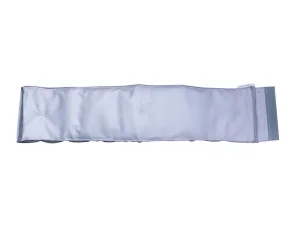
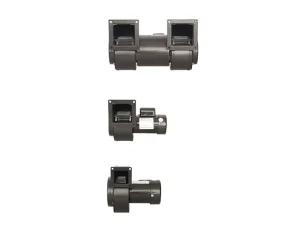
Engineered Heating Solutions Showcase
Explore our foundational range of certified thermal equipment, precision extrusion heating jackets, and high-efficiency ceramic heaters manufactured in Yancheng, China.





Engineering Superiority: Ceramic Water Heater Elements in China
Examining the structural mechanics, material purity, and advanced supply-chain synergy that distinguish top-tier Chinese industrial heating manufacturing.
Full Supply Chain Cluster in Yancheng
Yancheng, Jiangsu serves as the epicentre of China's electrothermal innovation. Direct access to high-purity electrical-grade steatite ceramic bodies, specialized Ni80Cr20 alloy filaments, and automated CNC tooling allows Kangpu Heater to reduce production lead times by 35% compared to Western counterparts while strictly controlling component tolerances within ±0.05mm.
Dry-Press Ceramic Dielectric Purity
Unlike standard domestic water heating rods prone to dielectric breakdown, our industrial ceramic elements utilize high-temperature refractory steatite bodies baked at 1,380°C. This delivers an electrical insulation breakdown resistance exceeding 2,500V AC at operating temperatures up to 800°C, effectively eliminating leakage current risks in direct immersion or indirect sheath water heating vessels.
Dry-Firing & Calcification Resilience
In municipal and industrial process water, lime scale and magnesium carbonate encrustation are the leading causes of sheath failure. Ceramic core elements installed inside protective immersion pockets (dry immersion) dissipate thermal loads at optimized watt densities (3.5 to 5.5 W/cm²). This prevents surface hot-spot boiling, significantly decreasing lime scale adhesion and enabling element replacement without draining storage tanks.
Global Industry Trajectory: Decarbonization & Electrification
How the worldwide transition from fossil fuel boilers to zero-emission electric thermal systems is reshaping procurement standards across Europe, North America, and the Asia-Pacific.
Megawatt-Scale Power-to-Heat Infrastructure
As industrial plants transition toward Net-Zero carbon mandates, gas-fired boilers are systematically replaced with modular ceramic electric hot water generators. Ceramic elements offer superior ramp-up cycle capabilities, tolerating rapid on/off pulsing via solid-state relays (SSRs) without degrading element core crystallites, ensuring uninterrupted continuous multi-megawatt uptime.
Digital IoT Integration & Thermocouple Feedback
Modern engineering demands granular temperature surveillance. Kangpu incorporates dual-sensor RTDs and Type K thermocouples internally into ceramic modular segments. This enables predictive lifecycle analysis, identifying localized scale insulation before thermal runaway causes catastrophic sheath rupture in commercial installations.
High Corrosion Resistance Sheathing Metallurgy
Global EPC contractors increasingly mandate pairing ceramic elements with advanced austenitic alloys, including Incoloy 800/825, Titanium Grade 2, and SUS316L. This ensures resilience against aggressive RO reject streams, chloride pitting in coastal sanitation plants, and harsh acidic industrial cleaning washdowns.
Comparative Engineering Matrix: Industrial Heating Elements
A technical baseline helping plant engineers and system designers evaluate ceramic water heater elements against legacy immersion and metallic technologies.
| Evaluation Parameter | Steatite Ceramic Water Heater Element | Standard Tubular Copper Element | Mica Band Element | Cast-In Aluminum System |
|---|---|---|---|---|
| Direct Core Temperature Limit | Up to 1,000°C | Approx. 350°C | Approx. 300°C | Approx. 450°C |
| Heating Medium Mode | Indirect Pocket / Air / Fluid Sheath | Direct Water Immersion | Conduction on Cylindrical Outer Body | Surface Contact Conduction |
| Maintenance Downtime | Zero tank draining needed (slip-in replacement) | Complete tank draining required | Exterior replacement, moderate setup | High labor; requires casing dismounting |
| Resistance to Hard Water Scaling | Exceptional (Low uniform surface watt loading) | Poor (Prone to scale cracking & burnout) | N/A (External application only) | N/A (Used on barrels and molds) |
| Typical Lifespan Expectancy | 25,000 - 40,000 Operating Hours | 5,000 - 10,000 Operating Hours | 8,000 - 12,000 Operating Hours | 20,000 - 30,000 Operating Hours |
Comprehensive Macro-Industry Solutions & Applications
Tailored thermodynamic delivery for commercial facilities, municipal purification systems, and precision processing machinery.
Commercial Hot Water Calorifiers
Widely deployed in large-volume potable water calorifiers for hospitals, university campuses, and hotels. Ceramic elements slot securely inside flange-mounted dry pockets. When maintenance cycles arrive, operators remove and replace core elements in under five minutes without draining hot water reservoirs or interrupting facility supply pressure.
Plastics Extrusion & Barrel Cooling Zones
Seamlessly bridging fluid and structural processing, our high-temperature ceramic band configurations integrate directly with our patented precise cooling and heating assemblies on twin-screw extruders, masterbatch compounding barrels, and PVC-O orientation systems, safeguarding plastic melts within strict ±1°C thresholds.
Industrial CIP & Chemical Process Heating
Clean-In-Place (CIP) systems in pharmaceutical, brewing, and dairy facilities require rapid temperature cycling from ambient to 85°C caustic wash regimes. Ceramic heating assemblies enclosed within electropolished 316L stainless steel manifold sleeves prevent fluid contamination and withstand aggressive sanitation chemicals without corrosion.
Global Enterprise Procurement & OEM Standardization
Eliminate project risks with precision tooling, certified traceability, and our proven 7-stage custom manufacturing protocol.
CAD/SolidWorks Design
Element geometry, cold-zone lengths, termination lugs, and watt density calculations are mapped directly to your equipment shell drawings within 24 hours.
Hard Mold Tooling
We do not rely on fragile rapid prototypes. Functional samples are cast from full-production hard dies, guaranteeing mass-production uniformity.
Hi-Pot & Insulation Testing
Every element batch undergoes flash-testing up to 2,500V, megohmmeter insulation resistance checking (>100MΩ cold), and infrared thermography thermal mapping.
Export Crating & Logistics
Heavy-duty multi-layer internal cushion packing protects ceramic beads against transit vibration. Shipped with complete mill test certificates (MTC).
Frequently Asked Questions (FAQ)
In-depth engineering answers addressing installation, selection, customization, and warranty assurances.
What makes steatite ceramic water heater elements superior to conventional tubular heaters?
Can Kangpu customize ceramic heaters according to proprietary OEM blueprints?
What is Kangpu's 5-Year After-Sales Warranty policy?
How should an engineer determine watt density for water heating applications?
Which international markets does Kangpu supply, and what certifications are held?
Advanced Thermal Processing & Auxiliary Systems
Complete your facility specifications with high-density heating elements, fluid pipelines, oil furnaces, explosion-proof units, and temperature sensors.