

Precision Engineering Solutions
Standard & Custom Industrial Heating Elements
Engineered for high-reliability enclosures, injection and extrusion barrels, cleanrooms, and thermal oil process lines. Explore our core manufactured product line below.
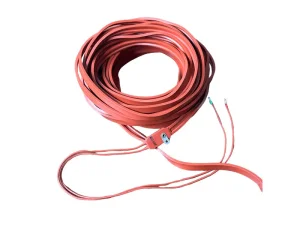
CE Certification Flexible Heaters for Custom Applications
Explore Specification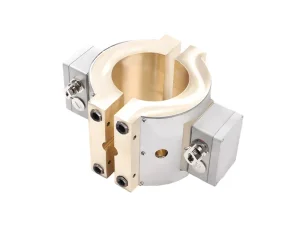
CE Certification Cast Aluminum/Copper Heater
Explore Specification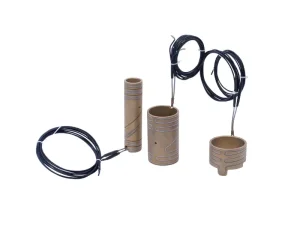
High-Quality (Hot-runner) Spring heater/Coil heater
Explore Specification
High-Quality Cleaning furnace Manufacturer
Explore Specification
China Portable Ceramic Heaters from China Suppliers
Explore Specification
Best Heating/Cooling Integrated System
Explore Specification
High-Quality Heat-conducting oil furnace
Explore Specification
Industry Whitepaper Depth
The Science of Micro-Climate Control in Industrial Enclosures
In modern industrial infrastructure, an electrical cabinet is not merely a steel housing; it is an active micro-climate where temperature differentials and relative humidity constantly threaten electronic integrity.
Dew Point Suppression
Condensation occurs when internal surface temperatures drop below the ambient dew point. Industrial enclosure heaters raise interior temperatures by 3°C to 5°C above ambient levels, preventing destructive water film formation on sensitive switchgear, PLCs, and VFDs.
Corrosion Prevention
Relative humidity exceeding 65% exponentially accelerates galvanic corrosion on PCB copper traces, terminal blocks, and relay contacts. By maintaining relative humidity below 60%, enclosure heaters protect infrastructure from flashovers and short-circuit faults.
Cold-Start Protection
Industrial electronics operating in sub-zero climates face solid-state latch-up, liquid crystal display freezing, and altered component tolerances. Positive thermal elements provide dependable pre-heating for smooth operational start-up at -40°C.
Global Market Analysis
Commercial Status & Industrial Trends
The global enclosure heating and cabinet climatization market is undergoing rapid evolution driven by energy transition, edge infrastructure, and autonomous manufacturing.
7.8%
CAGR (2024-2032)
Annual growth rate driven by renewable distributed energy resources, outdoor battery energy storage systems (BESS), and EV fast-charging network deployments worldwide.
PTC
Self-Limiting Shift
Market transition from traditional nichrome open-coils to Positive Temperature Coefficient (PTC) ceramic semi-conductors that inherently prevent thermal runaway without auxiliary cutouts.
IP66+
Extreme Ruggedization
Mounting demand for anodized marine-grade aluminum profiles and siliconized heating cores resistant to salt spray, hydrogen sulfide, and sub-sea moisture ingress.
Smart
IoT Integration
Rise of integrated Modbus/IO-Link hygrostats communicating real-time boundary layer delta-T values directly to central SCADA and DCS control panels.
Technical Architecture
Engineering Differentiation: PTC Thermistor vs. Wire-Wound
A granular side-by-side technical evaluation for project engineers, specifiers, and electrical panel builders.
| Evaluation Parameter | Advanced PTC Semiconductor Heating | Traditional Resistance Wire (Mica / Tubular) | Engineering Benefit |
|---|---|---|---|
| Operating Mechanism | Ceramic barium titanate doped thermistor with self-regulating resistance curve | Nickel-chromium (NiCr) alloy wire wound around mica core or swaged in steel sheath | PTC limits peak surface temperature automatically as cabinet warms |
| Thermal Runaway Safety | Inherent safe cutoff point (Curie temperature); cannot overheat even if fan fails | Requires external bi-metal thermal cutouts or thermal fuses for safety shutdown | Zero risk of fire in sealed NEMA 4X / IP66 control enclosures |
| Inrush Current Profile | Dynamic high initial surge (up to 3x nominal) dropping in seconds to steady state | Linear ohmic current draw; stable with negligible initial inrush surge | PTC achieves rapid cabin warm-up within first 120 seconds of start |
| Voltage Versatility | Wide-range capability (110V-250V AC/DC in single unified SKU model) | Fixed voltage rating; requires dedicated SKUs for 110V, 230V, or 400V supplies | Reduces global OEM inventory SKUs by up to 60% across world markets |
| Surface Temperature | Maintained at touch-safe threshold (<80°C) with protective plastic shielding | Frequently exceeds 160°C to 240°C during continuous heavy duty cycles | Allows close mounting near delicate cables and plastic wire ducts |
| Longevity & Degradation | Virtually zero oxidation degradation; service life >100,000 continuous hours | Susceptible to thermal expansion stress fatigue and resistance wire embrittlement | Reduces unplanned factory maintenance shutdowns and panel failures |
Real-World Deployment
Localized Application Scenarios & Case Studies
From sub-zero Arctic wind parks to corrosive coastal desalinations, Kangpu enclosure and process heating elements perform under the harshest environmental constraints.
Wind Turbine Pitch & Yaw Cabinets
Environment: Offshore North Sea, ambient temperatures down to -35°C with severe saline mist.
Solution: Fan-assisted 400W PTC enclosure heaters combined with C5-M rated anodized heat sinks to ensure pitch motor brake contactors never freeze during curtailment periods.
Utility-Scale Solar Central Inverters
Environment: Atacama & Middle East deserts, day-night thermal swings spanning 45°C.
Solution: Natural convection anti-condensation heaters managed by electronic hygro-thermostats, triggering pre-dawn heating cycles to purge nighttime desert dew prior to inverter morning ramp-up.
Battery Energy Storage Systems (BESS)
Environment: Outdoor modular containerized power systems with strict lithium-ion temperature windows.
Solution: Precision forced-air circulation heaters maintaining battery BMS and high-voltage DC switchgear enclosures above critical condensing thresholds under shifting climate loads.
Engineering Methodology
Macro Thermal Calculation & Sizing Formula
Accurate enclosure heater selection prevents both under-heating (leading to dew formation) and over-heating (shortening capacitor life). Kangpu applies rigorous thermodynamic modeling.
Required Heating Power Formula (DIN 57 660 / VDE 0660)
The thermal power requirement for maintaining temperature above the ambient dew point in a static enclosure is calculated using:
PH = (A × k × ΔT) - PV
PH = Required heating power (Watts)
A = Exposed enclosure surface area (m²)
k = Heat transmission coefficient (W/m²·K). Sheet steel: ~5.5; Stainless steel: ~4.5; Aluminum: ~12.0; Polyester/Plastic: ~3.5
ΔT = Temperature differential between required interior and minimum external ambient (K)
PV = Internal waste heat dissipation generated by active electrical components (Watts)
Aerodynamic Convection & Installation Rules
Bottom-Third Positioning: Always mount convection heaters in the lowest 20% of the enclosure cabinet to establish a natural laminar chimney effect, ensuring full vertical heat circulation.
Clearance Dimensions: Maintain at least 50mm clearance above and below the finned extrusion, and 20mm horizontal spacing from plastic wire ducts and cable bundles.
Dual-Loop Sensing: Pair the heating unit with a mechanical or electronic hygro-thermostat configured to initiate heating whenever relative humidity exceeds 65% RH, regardless of absolute ambient temperature.
Future Outlook
Technology Roadmap: Next-Gen Cabinet Climatization
Kangpu Heater (Yancheng Laier Heating Technology Co., Ltd.) is actively shaping the future of micro-climate thermal equipment through proprietary materials science and smart electronics.
Phase 1: Graphene-Enhanced Elements
Integrating chemical vapor deposition (CVD) graphene coatings into aluminum extrusion fins to increase radiant heat dissipation by 34%, shrinking heater physical envelope requirements in high-density rack enclosures.
Phase 2: Predictive AI Dew-Point Forecasting
Embedded microcontrollers executing Edge-AI algorithms that cross-reference barometric trends, external humidity, and active load cycles to initiate anti-condensation heating prior to thermodynamic dew point attainment.
Phase 3: Circular Zero-Carbon Lifecycle
Achieving complete cradle-to-gate carbon-neutral manufacturing across all ceramic and extruded alloy elements, utilizing 100% recycled aerospace-grade aluminum and closed-loop sintering kilns by 2030.
Engineered OEM Portfolio
Comprehensive Industrial Heaters & Thermal Accessories
Direct from Yancheng factory floor with over 40 years of precision craftsmanship, CE certification, and five-year after-sales warranties.
High-Quality Portable Ceramic Heaters for Industry - Reliable Solutions
Explore Specification
CE Certification Explosion Proof Electric Heater
Explore Specification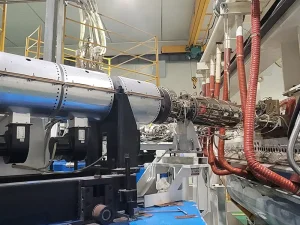
CE Certification Electromagnetic Induction Heater
Explore Specification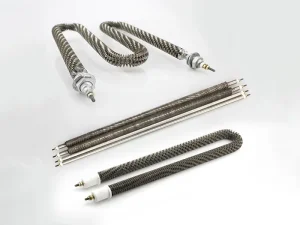
China High Density Heating Element
Explore Specification
High-Quality Industrial Thermocouple
Explore Specification
China Safe and Durable Mica Heaters
Explore Specification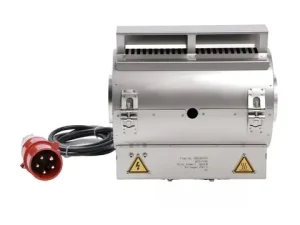
CE Certification Precise Cooling and Heating System
Explore Specification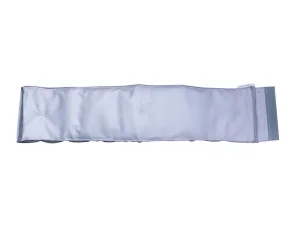
Best Durable Heat Insulation Covers
Explore Specification
Technical FAQ
Frequently Asked Questions on Enclosure Heating & Manufacturing
Comprehensive engineering clarifications regarding thermal sizing, installation kinematics, compliance certifications, and OEM customization capabilities.
Why is an enclosure heater necessary if the internal electronics already generate heat during operation?
While operating electronics generate operational waste heat (PV), equipment shutdowns during nighttime, maintenance periods, or weather anomalies cause internal cabinet temperatures to plummet rapidly. When ambient temperatures drop, the interior air cools faster than external air, driving relative humidity above the 100% saturation point and triggering instant condensation on cold metal surfaces and PCB boards. An automated enclosure heater guarantees baseline thermal stabilization regardless of whether host equipment is on or off.
What is the primary operational advantage of PTC ceramic heating technology?
PTC (Positive Temperature Coefficient) thermistors exhibit non-linear electrical resistance characteristics. As the ceramic temperature approaches its engineered Curie point (typically 120°C to 200°C), electrical resistance increases exponentially. This natural physical property automatically chokes electric current, rendering the heater inherently self-limiting. The unit cannot physically overheat or cause ignition even if air vents are completely blocked or circulation fans stall, eliminating catastrophic failure modes common to nichrome open wire heaters.
How does Kangpu Heater enforce manufacturing quality across 40 years of operation?
Kangpu Heater (Yancheng Laier Heating Technology Co., Ltd., est. 1986) operates a strict 7-stage customization workflow: Industrial ID Design, Parameter Engineering, Real-Mold Tooling Sample Production, Customer Fit Confirmation, Engineering Refinement, Lab Electrical/Thermal Validation, and Batch Traceable Mass Production. Each component undergoes hipot dielectric testing, insulation resistance verification, and high-temperature endurance profiling under ISO 9001 and CE frameworks, backed by our industry-leading 5-year warranty.
When should an engineer specify a forced-air fan heater versus a natural convection heater?
Natural convection heaters are recommended for compact enclosures (below 1.2 meters in height or internal volumes under 0.5 m³) where unimpeded vertical thermal draft is adequate and silent, maintenance-free operation is paramount. For tall automation suites, double-door enclosures (volumes >1.0 m³), or densely packed control cabinets with severe internal air baffling, fan-assisted heaters (forced circulation) are mandatory to eliminate stagnant cold pockets and ensure uniform thermal distribution.
What mounting orientations and spacing distances are required for safe operation?
Enclosure heaters must be mounted vertically on standard 35mm DIN rails (EN 60715) or directly to the backplate with fin channels oriented vertically to facilitate unrestricted convection. A minimum vertical safety clearance of 50mm to 100mm must be maintained above and below the housing, and at least 20mm lateral spacing from adjacent components, terminal blocks, and cabling. Heaters should never be installed directly below temperature-sensitive electronics or PLCs.
Can Kangpu produce custom enclosure heaters tailored to unique voltages, profiles, or marine standards?
Yes. Kangpu specializes in bespoke OEM builds. We tailor physical extrusion profiles, wire lead styles, terminal connection blocks (screw clamp vs. push-in spring terminal), input supply voltages (12V DC, 24V DC, 48V DC, 110-250V AC/DC, or 400V 3-phase), and specialized corrosion coatings (such as hard-anodized marine finishes meeting ASTM B117 salt spray standards for offshore deployment).