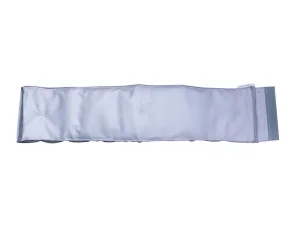
Featured Industrial Heating Products & Thermal Systems
Explore our primary array of high-density heaters, precision cooling-heating integrated zones, and heavy-duty elements engineered for global export.







Flexible Heaters in Modern Industry: Strategic Trends & Technological Evolution
From aerospace prototyping to high-yield plastics extrusion and semiconductor process chambers, flexible heating systems are redefining thermal management through geometric versatility and dynamic response.
Geometric Conformability
Traditional rigid band and cast-in heaters are bounded by planar or strictly cylindrical contours. Modern flexible heating technology—incorporating etched-foil substrates, specialized silicone rubber matrices, and polyimide thin-films—enables multi-axis intimate contact across compound curves, valves, conical manifolds, and complex fluid transfer lines without thermal impedance air gaps.
High Watt-Density & Low Thermal Mass
Because the dielectric layers are exceptionally thin (often under 1.5mm), heat transfer by conduction is virtually instantaneous. This minimal thermal mass reduces overshoot and cycling hysteresis, permitting ultra-precise PID closed-loop feedback in medical diagnostic equipment, additive manufacturing beds, and high-purity chemical processing.
Decarbonization & Energy Efficiency
Global net-zero mandates are pushing process plants away from fossil-fueled jacketed steam towards direct electric surface heating. Flexible surface trace heating delivers up to 98% localized thermal efficiency, completely mitigating line transmission losses and chimney exhaust emissions typical of centralized fossil boilers.
Global Sourcing Requirements: Evaluating Tier-1 Flexible Heater Exporters
Industrial buyers evaluate manufacturers not solely on catalog price, but on dielectric integrity, production batch traceability, custom tooling speeds, and continuous high-temperature endurance.
| Evaluation Parameter | Commercial Grade / Trading Standard | Kangpu (Laier) Engineering Standard | Operational Impact for End Users |
|---|---|---|---|
| Dielectric Sheath Integrity | Standard commercial silicone; prone to delamination above 180°C. | Reinforced fiberglass-impregnated high-tier silicone or Kapton polyimide; rated up to 250°C continuous (450°C for specialized mica/ceramic hybrids). | Prevents dielectric breakdown, arc-over, and catastrophic chemical degradation during continuous operation. |
| Resistive Circuit Geometry | Coarse hand-wound resistance wire; uneven thermal gradients with hotspots. | CAD-optimized, photo-etched alloy foil circuits with tailored distributed wattage profiles. | Eliminates localized polymer burning, optimizes edge-loss compensation, and doubles heater lifespan. |
| Pre-Production Validation | Digital spec sheet confirmation only; direct ramp to commercial batch. | Strict 7-stage cycle: ID design, real-mold custom sampling, rigorous electrical/thermal test before mass sign-off. | Zero risk of bolt-hole misalignment, improper lead exit angles, or thermal underperformance on site. |
| Warranty & Traceability | 6 to 12 months limited; zero material batch tracking. | Full 5-Year After-Sales Warranty backed by unique batch-level manufacturing traceability. | Reduces unplanned downtime and provides total assurance for mission-critical industrial extruders and process lines. |
Environmental Ingress & Chemical Resistance
For heavy process environments, heaters must withstand hydraulic oil exposure, chemical splashing, and high ambient moisture. Our vulcanized edge-sealed silicone designs achieve IP65 to IP67 sealing ratings, ensuring safe and reliable operation in plastics compounding, outdoor gas pipelines, and maritime applications.
Integrated Sensors & Mechanical Clamping
We engineer flexible heaters with built-in Type J/K thermocouples, PT100 RTDs, and precision bimetallic thermostats directly laminated into the inner backing layer. Fastening mechanisms include high-shear pressure-sensitive adhesives (PSA), spring-loaded eyelets, silicone straps, and mechanical hooks for quick retrofits.
Macro-Industry Engineering Solutions
Tailored heating architecture delivering superior process repeatability, energy conservation, and extended maintenance intervals across demanding heavy industries.
Plastics Extrusion & Injection Molding
Combining custom flexible heaters with our patented heating/cooling integrated systems allows barrel temperatures to be maintained within ±1°C. Our nano-infrared and ceramic-insulated elements decrease radiant workshop heat waste by up to 30%, lowering factory HVAC load while avoiding thermal degradation of engineering resins.
Molecularly Oriented Pipe Processing (PVC-O)
Manufacturing high-impact, burst-resistant PVC-O pipes demands strictly controlled multi-stage heating. Our proprietary PVC-O orientation ovens and customized curved heaters achieve circumferential temperature uniformity across the polymer preform, ensuring uniform biaxial stretch ratios and zero wall thickness deviations.
Fluid Dynamics, Steam & Industrial Tanks
For asphalt distribution, viscous chemical transport, and bulk fluid storage, our wrap-around flexible heaters and explosion-proof pipeline heaters provide uniform thermal immersion. Coupled with zero-emission electromagnetic steam boilers, process heating plants achieve clean operational compliance without high-pressure gas risks.
Global Compliance, Rigorous Testing & Localized Engineering
Exporting to over 100 countries requires unyielding adherence to international safety directives, dielectric guarantees, and responsive technical engineering support.
CE & RoHS Compliance
Every flexible heating assembly, ceramic band, and cast-in component is engineered in compliance with EU Low Voltage Directive (LVD 2014/35/EU) and RoHS environmental restrictions. High-voltage insulation hi-pot tests (typically 1,500V to 2,000V for 60 seconds) guarantee electrical safety under harsh production conditions.
7-Stage Controlled Customization
Our engineering workflow mitigates commercial risk: Stage 01: ID Design → Stage 02: Parametric Customization → Stage 03: Production Tooling/Mold Creation → Stage 04: Client Sample Confirmation → Stage 05: Iterative Refinement → Stage 06: Functional Thermal Testing → Stage 07: Scaled Mass Production.
Worldwide Localized Support
Operating from our modern manufacturing base in Yancheng Economic Development Zone, Jiangsu, Kangpu provides dedicated multi-lingual technical consultations, CAD/3D STEP drawing confirmations within 24 hours, express prototype air freight, and full technical documentation for OEM engineers worldwide.
Technological Roadmap: The Next Era of Industrial Heating
Anticipating the convergence of advanced nanomaterials, edge-computing IoT thermal monitoring, and ultra-high-temperature flexible composites.
Carbon Nanotube (CNT) & Graphene Films
Moving beyond metallic foils, Kangpu's R&D center is testing conductive carbon nanotube ink formulations. These provide near-instant thermal rise, zero fatigue under continuous flexural cycling, and radical weight reduction for aerospace and portable field applications.
Embedded Edge-IoT Predictive Sensors
Next-generation flexible thermal blankets will feature distributed micro-thin sensor arrays. These stream continuous watt-density, resistance degradation, and thermal data directly to cloud SCADA platforms, predicting heater failure weeks before an open circuit can stall a factory line.
Eco-Insulation Hybrid Covers
Integrating aerogel thermal blankets directly with flexible heating elements allows outer skin temperatures to remain below 45°C during 300°C internal operations, protecting machine operators, eliminating workplace burns, and maximizing overall thermodynamic efficiency.
Frequently Asked Questions (FAQ)
Essential technical, manufacturing, and operational questions answered directly by Kangpu's senior engineering department.
Can Kangpu manufacture flexible and industrial heaters strictly to custom technical drawings?
What is the coverage and scope of Kangpu's 5-Year After-Sales Warranty?
How should buyers choose between Ceramic Band Heaters and Mica Band Heaters?
How does the 7-Stage sampling, prototyping, and approval process operate?
Which international markets and industrial sectors does Kangpu primarily serve?
Specialized Thermal Equipment & High-Performance Heaters
Explore our complete range of precision insulation blankets, pipeline heating units, heavy-duty oil furnaces, and PVC-O molecular orientation ovens.