
Primary Export Showcase
Precision Thermal Machinery & Heating Solutions
Engineered for heavy-duty plastic processing, chemical reactors, industrial fluid transport, and continuous continuous extrusion lines. Direct-factory export specifications.

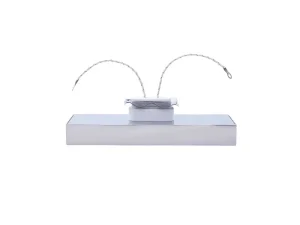
High-Quality Portable Ceramic Heaters for Industry - Reliable Heating Solutions from China Suppliers and Factory Manufacturers, Factory
View Technical Specs
Best Heating/Cooling Integrated System Exporter, Exporters
View Technical Specs
High-Quality Heat-conducting oil furnace Manufacturer, Exporter
View Technical Specs
China Efficient Portable Ceramic Heaters for Industry | China Suppliers & Factory Exporters, Factories
View Technical Specs
China Portable Ceramic Heaters from China Suppliers: Efficient Heating Solutions for Factories and Industries Manufacturer, Exporters
View Technical Specs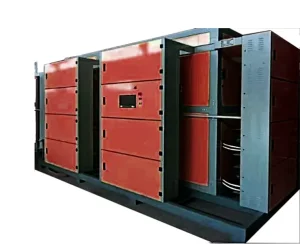
High-Quality Electromagnetic steam boiler Manufacturers, Factories
View Technical Specs
High-Quality Portable Ceramic Heaters for Industry - Reliable Temperature Control from China Suppliers and Factory Exporter, Factory
View Technical SpecsIndustry White Paper · E-E-A-T Benchmark
The Global Industrial Landscape & Thermal Machinery Imperatives
As modern manufacturing pivots toward automated precision, carbon abatement, and lean operational cycles, the thermal transfer sub-system remains the most thermodynamically vulnerable point in extrusion, injection molding, thermoforming, and chemical synthesis.
1986EST
Foundational Engineering Track Record
100+
Global Export Destinations
5,000+
Global Machinery Plant Integrations
5YRS
Batch-Traceable Direct Warranty
Thermal Parasitic Load Reduction
Traditional non-insulated band elements lose up to 42% of rated wattage directly to ambient air through conduction and radiation. High-density ceramic insulating blocks and proprietary nano-infrared reflective jackets redirect infrared radiation strictly inwards, compressing cycle ramp-up intervals by over 30% and yielding significant kilowatt-hour conservation per operating ton.
Energy ROI < 9 Months
Overcoming Severe Shear Heat Surges
Exothermic friction generated by screw flight rotations in high-viscosity polymers (UHMWPE, CPVC, fluoropolymers) routinely causes temperature overshoot. Kangpu’s patented integrated heating/cooling assemblies utilize counter-flow forced-air ducts or embedded copper tubing with specialized air deflectors to stabilize zone temperatures within ±1°C.
Patented Dynamic Stabilization
Electrification of Industrial Fluids
Combustion-driven fuel oil and gas boilers face aggressive decommissioning mandates under EU ETS and global net-zero governance. Zero-emission electromagnetic steam generators and closed-loop thermal oil furnaces deliver continuous, high-enthalpy thermal fluid transfer without localized particulate, nitrogen oxides, or carbon emissions.
Zero Scope-1 Emissions
Localized Field Deployments
Localized Application Scenarios in Primary Industrial Corridors
Industrial heating machinery does not operate in a vacuum. Operating environments differ drastically across global manufacturing nodes. Kangpu (Yancheng Laier Heating Technology Co., Ltd.) engineers custom thermal machinery configured specifically for regional voltages, atmospheric variances, and industry verticals.
North American Automotive & Blow Molding
In the Midwestern United States and Northern Mexico automotive corridors, continuous injection of engineering resins (PA66, PBT, polyphthalamide) demands tight thermal profiles. Kangpu supplies 480V three-phase high-density cast-copper and cast-aluminum barrel heaters with NEMA-compliant terminal enclosures. These units withstand continuous 24/7 clamp pressures and 380°C melt requirements while mitigating downtime from plastic residue contamination.
- 480V 60Hz balanced delta wiring configs
- Stainless steel braided high-temp flexible leads
- NFPA 79 compliant electrical housings
European PVC-O Infrastructure Pipe Extrusion
Across Germany, France, and Southern Europe, potable water networks are transitioning to molecularly oriented polyvinyl chloride (PVC-O). Kangpu designs and exports precision convection heating ovens and integrated multi-zone barrel tempering systems. These systems maintain the strict ±0.5°C biaxial orientation temperature required to align PVC polymer chains without thermal degradation, ensuring PN25 pressure ratings.
- CE Low Voltage & Machinery Directive adherence
- Multi-zone PID cascade loop integration
- Harmonic-free thyristor/SCR power firing
Southeast Asian Packaging & Monofilament
Extrusion plants throughout Vietnam, Thailand, and Indonesia experience high ambient relative humidity and ambient workshop temperatures often exceeding 40°C. Standard band heaters frequently suffer terminal flashover and premature coil oxidation. Kangpu provides ceramic band heaters with hermetically sealed moisture-resistant ceramic terminal blocks, silicone seal joints, and reflective outer heat jackets that reduce ambient heat rejection into the production hall.
- High-moisture creepage barrier seals
- Anti-corrosion 304/316 stainless jackets
- Energy-saving heat containment blankets
Manufacturing Excellence · Yancheng Hub
Supply Chain Resilience & Manufacturing Ecosystem Advantages
Headquartered in the national-level Economic and Technological Development Zone of Yancheng, Jiangsu, Kangpu leverages one of the world's dense precision heating clusters. Our vertical integration shields international buyers from global supply disruptions, erratic lead times, and unvetted raw material substitutions.
Raw Material Metallurgy
Direct upstream supply of Nichrome 80/20 (NiCr8020) resistance alloys and high-purity electrical-grade fused Magnesium Oxide (MgO) powder (>99.4% purity) guarantees optimal dielectric strength and zero micro-void hotspotting.
Tooling & Mold Autonomy
In-house CNC machining, high-tonnage precision bending, die-casting, and metal spinning allow real-mold prototyping in as little as 72 hours. We avoid the common export delays associated with outsourced foundry work.
Scale-Driven Unit Economics
Continuous volume throughput servicing 5,000+ accounts internationally allows automated winding, cold swaging, and laser robotic welding. This delivers up to a 35% cost advantage over Western small-batch workshops without quality compromises.
Traceable Quality Control
Every heating element is serialized and subjected to automated cold insulation testing (500V DC > 100MΩ), high-pot breakdown testing (1500V AC for 60s), and continuous thermal cycling before export crating.
R&D Horizon 2025–2035
Technology Roadmap: Next-Generation Intelligent Thermal Systems
The future of industrial machinery lies in the convergence of thermodynamics, edge-computing telemetry, and power semiconductor efficiencies. Kangpu's ongoing technology roadmap focuses on moving beyond passive resistive heat into self-regulating, predictive industrial architectures.
| Development Phase | Core Thermal Technology | Engineering Breakthrough | Industrial Target Application |
|---|---|---|---|
| Phase 1: Present Core | Nano-Infrared & Electromagnetic Steam Systems | High-emissivity ceramic coatings with 94.6% far-infrared radiant yield; IGBT induction generators. | Extruder energy retrofits, zero-emissions steam cleaning, food & pharmaceutical processing. |
| Phase 2: Transition (2025–2028) | Embedded Sensor Digital Twin Elements | Multi-point thin-film micro-thermocouples embedded inside sheath walls; real-time internal watt-density telemetry. | Sub-millimeter blown film lines, aerospace composite curing, high-speed cable compounding. |
| Phase 3: Smart Edge (2028–2031) | AI-Adaptive Predictive Thermal Management | Integration of IO-Link and CANopen communication directly into heater terminal heads; algorithmic thermal drift anticipation. | Fully autonomous lights-out manufacturing plants, robotic co-extrusion manufacturing. |
| Phase 4: Frontier (2031–2035) | Wide Bandgap Semiconductor Direct-Induction | Silicon Carbide (SiC) resonant high-frequency inverters running directly on machine barrels without resistive element contact. | Supercritical plastic processing, ultra-high temperature thermoplastic polyetherketone (PEEK) processing. |
Compliance & Reliability Framework
International Standards, Regulatory Approvals & Warranty Protocol
Procurement compliance in heavy industry requires absolute adherence to electrical safety, pressure boundary integrity, and hazardous substance elimination. Kangpu's manufacturing processes meet or exceed worldwide certification benchmarks.
Electrical Directives: CE & UL Readiness
All band heaters, tubular heaters, and duct heating installations conform to EN 60335-1 (Safety of Household and Similar Electrical Appliances) and EN 60204-1 (Safety of Machinery - Electrical Equipment of Machines). Insulation materials meet UL 94 V-0 flame retardancy metrics, utilizing high-grade steatite ceramic and natural Muscovite/Phlogopite mica.
CE LVD 2014/35/EU
Pressure Equipment: PED & ASME Standards
Our electromagnetic steam boilers and thermal fluid heating loops are hydrostatically pressure-tested to 1.5 times the maximum allowable working pressure (MAWP). Flanges, blind plates, and pressure relief channels are constructed in strict alignment with Pressure Equipment Directive (PED 2014/68/EU) and ASME Section I/VIII vessel engineering methodologies.
Hydrostatic 1.5x MAWP
The 5-Year Root-Cause Warranty
Unlike standard consumable element vendors offering 90-day guarantees, Kangpu delivers a 5-year after-sales framework for industrial clients. In the event of an unscheduled element burnout, failure analysis is initiated through serialized batch production logs, auditing alloy chemistry, line voltage logs, and duty-cycle logs to rectify root causes permanently.
Batch Traceable
Systematic Customization
The 7-Stage Custom Engineering & Mass-Production Workflow
Precision heater engineering must bridge customer mechanical specs and operational thermal physics without ambiguity. We execute orders through seven rigorous quality tollgates.
STAGE 01
ID Design & FEA Modeling
Thermal CAD modeling, boundary clearance review, clamp ergonomics, and mechanical dimensional verification based on customer barrel or duct blueprints.
STAGE 02
Watt-Density Customization
Thermodynamic calculation of operating voltage, total wattage, sheath watt-density (W/cm²), cold-zone terminal offsets, and conductor wire cross-sections.
STAGE 03
Production-Grade Sample Tooling
Unlike competitors who assemble loose prototypes by hand, we construct production-grade stamping dies and casting molds to ensure the sample matches final mass tolerances.
STAGE 04
Field Fitment Confirmation
The prototype element is mounted directly on the buyer's target extruder, nozzle, or oven to confirm physical clearance, lead flexibility, and clamping tension.
STAGE 05
Design Iteration & Tuning
Feedback on clamping tabs, junction box orientations, or thermocouple probe recess depths is integrated directly into the frozen revision file.
STAGE 06
Laboratory Stress Testing
Comprehensive verification: Dielectric breakdown checks, thermal imaging for thermal uniformity, cold-start current surges, and accelerated oxidation tests.
STAGE 07
Mass Scale & Export Packaging
Final serial manufacturing, automated QA verification, vacuum moisture-barrier bagging, and export crate crating for shock-free ocean or air freight.
Technical Knowledge Base
Frequently Asked Questions: Technical & Procurement Insights
Detailed answers addressing engineering feasibility, dielectric performance, selection criteria, and direct-factory purchasing logistics for industrial machinery components.
How do I choose between Ceramic Band Heaters and Mica Band Heaters for extruder barrels?
Mica band heaters are exceptionally thin (3.5mm to 5mm profile), have low thermal mass for immediate heating/cooling responsiveness, and operate reliably up to 280°C–320°C with maximum surface watt-densities around 3.5 to 4.5 W/cm². They are highly cost-effective and suited for small extruder barrels and injection nozzles. In contrast, Ceramic Band Heaters incorporate steatite ceramic knuckles surrounded by ceramic fiber insulation and a stainless steel sheath. They withstand continuous temperatures up to 500°C–650°C and watt-densities up to 6.5–8.0 W/cm². The external insulation cuts ambient thermal radiation by up to 25%–30%, making ceramic the clear technical selection for large-diameter extrusion barrels processing high-temperature resins like nylon, polycarbonate, or fluoropolymers.
What causes premature burnout in industrial band heaters, and how does Kangpu prevent it?
The leading cause of heater failure is thermal air-gap trapping between the inner heater sheath and the barrel surface. Air has an extremely low thermal conductivity (approx. 0.026 W/m·K); any gap traps heat inside the element, driving internal nickel-chrome resistance wire temperatures beyond metallurgical limits. Kangpu prevents this through two proprietary measures: First, precision rolled curvatures with standardized tolerances to maintain continuous surface contact. Second, custom clamping systems (such as double-screw barrel clamps and low-thermal-expansion draw bands) that maintain positive clamping pressure even during high-temperature thermal expansion cycles.
Can your electromagnetic steam boilers and oil furnaces integrate with PLC and SCADA architectures?
Yes. All electromagnetic induction boilers, thermal oil heating units, and integrated heating/cooling zone cabinets are engineered with industrial communication protocols. Standard options include RS-485 Modbus-RTU, Profinet, Ethernet/IP, and analog 4–20mA / 0–10V control loops. Our systems can be monitored, modulated, and interlocked directly through your master facility SCADA, allowing predictive thermal profiling, power demand peak-shaving, and automated emergency shutdowns.
What are the advantages of cast-in (aluminum/copper) heating elements compared to tubular band heaters?
Cast aluminum (rated to 350°C) and cast bronze/copper (rated to 650°C) heaters fully encapsulate heavy-gauge seamless tubular elements within a solid metal matrix. This provides superior mechanical rigidity, complete protection against polymer leaks and contamination, and ultra-uniform heat conduction. In addition, cast-in units can integrate cooling channels (stainless steel tubing) within the exact same casting. This creates an integrated heating/cooling zone assembly capable of rapidly removing internal shear heat from high-speed extrusion lines without causing thermal shock.
What specific documentation and certifications accompany each export consignment?
Every shipment includes an inspection and compliance dossier: Factory Acceptance Test (FAT) certificates documenting 100% Hi-Pot insulation breakdown results, cold resistance values, dimensional CMM inspection reports, CE Declaration of Conformity documents, electrical schematic wiring diagrams, and raw material mill certificates for stainless steel alloys and nickel alloys upon request.
Specialized Thermal Machinery
Advanced Heating Elements, Ovens & Process Assemblies
High-temperature ovens, hot runner coils, precision pipeline units, and sensor-coupled air heaters. Complete export configurations for OEMs and industrial modernization projects.

Best Pipeline Heater Manufacturers, Factory
View Technical Specs
High-Quality Thermocouple Exporter, Factory
View Technical Specs
China Safe and Durable Mica Heaters Factory, Factories
View Technical Specs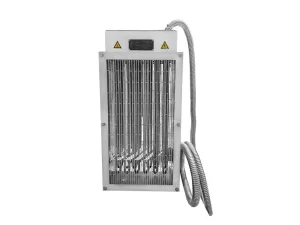
CE Certification Efficient Air Duct Heaters for HVAC Manufacturer, Factory
View Technical Specs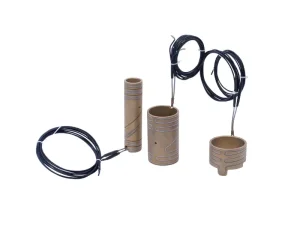
High-Quality (Hot-runner)Spring heater/Coil heater Manufacturers, Factory
View Technical Specs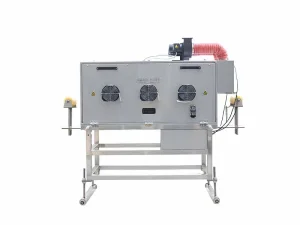
CE Certification PVC-O Ovens for Precision Heating Manufacturer, Manufacturers
View Technical Specs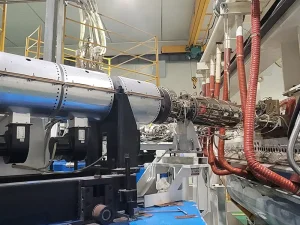
CE Certification Electromagnetic induction heater Manufacturer, Exporter
View Technical Specs
CE Certification Ovens Manufacturer, Exporter
View Technical SpecsDirect Factory Engineering Dispatch
Accelerate Your Thermal Machinery Procurement
Send your equipment engineering drawings, barrel diameter schematics, operating voltages, or target resin heating requirements. Our senior application engineering group in Yancheng will prepare an in-depth feasibility analysis and binding quotation within 24 business hours.