
Primary Engineered Infrared & Thermal Assemblies
Precision-engineered industrial heating solutions verified for long-life operation, high emissivity, and strict CE compliance across demanding extrusion and thermal processing lines.

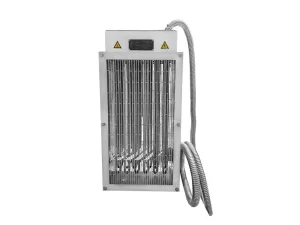



The Mechanics of High-Quality Infrared Radiant Heat Transfer
Evaluating electromagnetic wave propagation, Planck's spectral distribution, and Stefan-Boltzmann emission efficiency in industrial electric thermal engineering.
Planck's Spectral Radiation
Infrared radiant heating bypasses the conductive resistance of intermediate air layers by transmitting energy through electromagnetic photons directly onto the target substrate. Governed by Planck's law and Wien's displacement theorem, peak radiant wavelength shifts dynamically with source temperature. Our engineered ceramic matrix emitters achieve an emissivity index of $\epsilon \ge 0.92$ across the medium-to-long-wave band (2.5 µm to 10 µm), closely aligning with the molecular resonance of thermoplastics, resins, coatings, and organic substrates.
Stefan-Boltzmann Efficiency
Thermal radiant energy transfers proportionally to the fourth power of absolute temperature ($E = \epsilon \sigma T^4$). This mathematical relationship means that micro-refinements in emitter surface chemistry yield exponential increases in net usable flux. By embedding premium FeCrAl (Iron-Chromium-Aluminum) resistance wire into high-density steatite and alumina refractories, Kangpu elements operate at core temperatures up to 800°C without oxidative degradation, preserving emitter geometry and directional uniformity.
Minimal Boundary Layer Resistance
Traditional convection ovens and air-stream heaters suffer massive thermodynamic penalties caused by the laminar boundary gas film clinging to moving material webs and extrusion barrels. Infrared electromagnetic transmission transfers flux instantly through the stagnation layer, slashing thermal soak duration by 35% to 60%. This direct coupling delivers instantaneous thermal ramp rates, reduces equipment footprint, and minimizes parasitic standby heat dissipation throughout high-throughput factories.
| Infrared Technology Tier | Predominant Wavelength | Source Emitter Temp | Emissivity ($\epsilon$) | Core Industrial Application Fit |
|---|---|---|---|---|
| Short-Wave Infrared (NIR) | 0.78 – 1.4 µm | 1,800°C – 2,400°C | 0.70 – 0.82 | High-speed PET blow molding, thin coatings, rapid moisture flash-off |
| Fast Medium-Wave IR (Quartz) | 1.4 – 2.0 µm | 1,200°C – 1,600°C | 0.80 – 0.88 | Plastic thermoforming, powder coat pre-gelling, silicone curing |
| Medium-Wave Industrial IR | 2.0 – 4.0 µm | 600°C – 1,000°C | 0.88 – 0.94 | Extruder barrel bands, automotive composites, PVC orientation |
| Long-Wave Ceramic Infrared (FTE/HTE) | 3.0 – 10.0 µm | 300°C – 750°C | 0.92 – 0.97 | Deep polymer heating, web converting, thermoforming heavy-gauge sheets |
Localized Application Scenarios of Industrial Radiant Heat
Across European polymer clusters, North American automotive plants, and Asian smart fabs, radiant infrared emitters solve critical heat-transfer bottlenecks.
1. Polymer Extrusion & Blow Molding
On high-capacity single- and twin-screw extruders, nano-infrared band heaters replace conductive cast-in jackets. By radiating thermal energy into the cylinder wall through tuned reflective quartz barriers, barrel warm-up cycle times drop by 40%, while external shell skin temperatures remain under 60°C, enhancing shop-floor ergonomics and reducing HVAC chill demand in temperate regions.
2. Automotive Composites & Battery Cathodes
In electric vehicle battery cell manufacturing, radiant infrared modules bake wet-coated slurry on aluminum and copper current collector foils. Infrared waves penetrate the solvent matrix volumetrically, evaporating volatile organic compounds from the substrate out toward the surface without crusting or pinhole formation, ensuring ultra-dense cathode microstructures.
3. Molecularly Oriented PVC-O Pipe Lines
Molecular orientation of poly(vinyl chloride) requires heating thick-walled pipe preforms precisely within an exact rubber-elastic viscoelastic processing window (±1.5°C). Kangpu's custom radiant PVC-O multi-zone heating chambers utilize radial ceramic arrays that deliver uniform circumferential heat flux, preventing localized necking or wall failure during axial stretching.
4. Textile, Paper & Continuous Web Converting
Moving webs at speeds exceeding 400 m/min demand contactless heating arrays capable of instantaneous cutoff to eliminate fire hazards upon unexpected web breaks. Fast medium-wave quartz radiant modules integrate rapid-response thyristor (SCR) power switches, cooling to sub-combustion thresholds within milliseconds upon sensor shut-down triggers.
5. Semiconductor & Electronics Packaging
Wafer preheating, underfill encapsulation, and printed circuit board (PCB) reflow soldering utilize clean-room class ceramic infrared arrays. The chemical purity of the ceramic glaze prevents ion leaching or outgassing under hard vacuum or inert nitrogen atmospheres, ensuring yield integrity in microelectronic assembly clean rooms.
6. Additive Manufacturing & Powder Preheating
Selective Laser Sintering (SLS) and binder-jet 3D printing equipment rely on overhead infrared radiant heaters to stabilize high-performance polymers (PA11, PA12, PEEK) just fractions of a degree below their crystallization points, preventing curled print layers and post-cure thermal fractures.
Worldwide Commercial & Industrial Decarbonization Mandates
Industrial energy policies across Europe, North America, and the Asia-Pacific region are accelerating the retirement of fossil-fired thermal equipment in favor of precision electric infrared.
European Union (Fit for 55 & CBAM)
The European Union's Carbon Border Adjustment Mechanism (CBAM) and strict Industrial Emissions Directive (IED) penalize gas-fired combustion kilns and radiant tubes. Plant engineers across Germany, Italy, and France are systematically retrofitting continuous drying tunnels with electrified ceramic and nano-infrared radiant systems to eliminate direct Scope 1 carbon dioxide emissions, capitalizing on the high thermal efficiencies of closed-loop electric heaters.
North American Advanced Manufacturing
In the United States and Canada, utility rebate initiatives and OSHA workplace air quality thresholds are driving a shift toward electric radiant band systems on plastics extrusion lines. By capturing up to 30% electrical energy savings compared to uninsulated mica heating elements, manufacturers mitigate escalating peak-demand electric tariffs while reducing cooling loads within enclosed manufacturing facilities.
Asia-Pacific & Emerging Industrial Hubs
High-growth manufacturing clusters throughout Vietnam, Indonesia, Mexico, and India are upgrading legacy extrusion and blow molding machinery. Direct import partnerships with specialized Chinese manufacturers like Yancheng Laier Heating Technology provide OEM-tier, CE-certified radiant elements that ensure consistent melt temperatures, lower scrap rates, and rapid return on capital expenditures.
China Factory Supply Chain Resilience & Efficiency Advantages
How four decades of concentrated supply chain integration in Yancheng, Jiangsu delivers engineering responsiveness, raw material stability, and aggressive cost advantages.
Raw Material Integration
Yancheng Laier controls the entire production chain from high-purity alumina and steatite ceramic powder blending to in-house FeCrAl/NiCr alloy winding. Direct vertical integration insulates buyers from global commodity volatility, ensuring tight dimensional tolerances, consistent electrical resistance, and zero production bottlenecks.
Tooling & Mold Agility
Unlike distributors reliant on third-party job shops, our CNC tooling facility designs and machines custom stamping and casting dies internally. In our 7-stage custom workflow, real production molds are fabricated within days, ensuring rapid delivery of high-precision prototypes that match final mass-production quality.
Automated QA & Testing
Every radiant heater undergoes 100% automated quality screening before dispatch. Testing includes high-voltage dielectric breakdown checks (up to 2,000V AC), cold and hot insulation resistance verification (>50 MΩ), laser-calibrated dimensional inspections, and thermographic infrared imaging to verify uniform heat flux.
Global Freight Readiness
Export packaging features custom high-density closed-cell EPE foam, heavy-duty moisture-barrier shrink films, and ISPM-15 compliant heat-treated timber crates. Whether shipping via expedited air freight or consolidated ocean containers, our goods arrive factory-fresh and ready for immediate plant installation.
Technology Roadmap: Next-Generation Radiant Heat Architectures
Exploring advanced nanomaterial emitters, intelligent digital twins, and closed-loop infrared control protocols shaping future manufacturing.
1. Graphene & Ceramic Nano-Coatings
Next-generation radiant heating architectures feature hybrid ceramic-graphene surface coatings. These micro-thin layers increase surface emissivity to $\epsilon = 0.98$ while mitigating thermal micro-cracking during fast thermal cycles. Advanced nano-coatings enable lower core wire operating temperatures for equivalent radiated flux, effectively doubling resistance wire operational lifespans beyond 25,000 hours.
2. IoT Smart Emitters & Digital Twins
By integrating micro-thermocouple probes and digital impedance telemetry directly into the ceramic emitter matrix, modern radiant systems communicate with industrial IoT gateways. Continuous monitoring of resistance drift identifies element fatigue prior to catastrophic failure, enabling predictive maintenance schedules and preventing unscheduled extruder line shutdowns.
3. Dynamic Wavelength Modulation
Future industrial ovens will employ multi-frequency radiant arrays where short, medium, and long-wave emitters are controlled by machine-vision pyrometry. As target materials transition through melting, gelation, and solid states, real-time closed-loop control modulates the emitted spectrum to match material absorption peaks, maximizing thermodynamic process efficiency.
Global Regulatory Compliance & Localized Technical Support
Navigating complex international certifications, quality frameworks, and dedicated engineering consultation for seamless global commissioning.
CE, UL, & RoHS Certification
All radiant elements and industrial thermal assemblies manufactured by Kangpu comply with international electrical safety directives. Fully certified under the European Low Voltage Directive (LVD 2014/35/EU) and Electromagnetic Compatibility (EMC 2014/30/EU), our products satisfy UL 499 standards for electric heating appliances and adhere to RoHS/REACH limits regarding hazardous heavy metals.
Comprehensive 5-Year Warranty
We provide an industry-leading 5-year after-sales warranty on our core industrial heating elements. Each component is laser-etched with a traceable batch serial number, linking it directly to raw material lots, winding technician logs, and final inspection datasets. In the rare event of premature failure, our root-cause analysis protocol ensures rapid corrective action and immediate replacement dispatch.
Direct Engineering Consultation
Our sales engineering staff works directly with machine builders, facility engineers, and OEM procurement teams. By analyzing customer 2D/3D CAD models, target heat profiles, and voltage specifications, our technical team calculates optimal watt densities, terminal block locations, and clamping mechanisms prior to sample production, minimizing integration friction.
Frequently Asked Questions: Industrial Infrared Radiant Systems
Direct answers to the most common engineering and procurement inquiries regarding radiant efficiency, element lifespan, and application integration.
Ceramic infrared emitters (such as FTE, HTE, and trough elements) operate primarily in the long-wave spectrum (3.0 to 10 µm) with surface temperatures between 300°C and 750°C. Their thermal inertia is high, making them ideal for continuous, uniform thermal soaking of dense plastics, thick webs, and extrusion barrels. Quartz radiant emitters operate in the medium to fast-medium wave spectrum (1.4 to 3.0 µm) with temperatures up to 1,500°C. They feature rapid thermal response (reach operating temperature in seconds), making them well-suited for intermittent cycles, thermoforming, and paint curing tunnels.
Traditional conductive mica or cast-aluminum band heaters transfer heat through physical contact, suffering thermal loss wherever air gaps occur between the band and the barrel wall. In contrast, nano-infrared radiant heaters utilize radiant energy transfer across an internal air space combined with an aerogel or multi-layer ceramic fiber insulation jacket. This reflection ensures that over 90% of emitted energy is directed into the barrel, keeping the outer casing under 60°C and reducing electrical consumption by 20% to 35%.
Yes. Custom manufacturing accounts for over 70% of our daily production volume. Our engineering department works from physical samples, 2D technical drawings, or machine dimension specifications. We match the internal diameter, overall width, terminal block styling (screw terminals, European plugs, high-temp ceramic blocks), mounting brackets, and watt density profiles to ensure direct drop-in compatibility with existing systems.
Under continuous industrial operating conditions within recommended voltage parameters, Kangpu ceramic radiant elements typically exceed 20,000 operating hours (often 3 to 5 years of continuous production). Element longevity depends heavily on avoiding severe thermal shock, maintaining clean ceramic glaze surfaces, and utilizing solid-state relays (SSRs) or SCR phase-angle power controllers rather than mechanical contactors.
We employ specialized export-grade packaging engineered for fragile refractories and precision heaters. Each ceramic element is individually cradled in high-density customized expanded polyethylene (EPE) die-cut foam, packed inside heavy-gauge corrugated boxes, and consolidated in heat-treated, ISPM-15 certified plywood cases with reinforced steel banding. Shockwatch tilt and impact indicators are affixed to ocean and air freight shipments upon customer request.
Our structured manufacturing workflow spans: (1) Industrial design review and clearance validation; (2) Electrical and dimensional parameter confirmation; (3) Production-grade tooling mold fabrication; (4) Physical prototype sample delivery to client; (5) Engineering revisions based on real-world installation feedback; (6) Full-voltage dielectric, thermal image, and watt-density performance validation; and (7) Mass manufacturing backed by continuous batch traceability.
Specialized Industrial Thermal Systems & Components
Advanced pipeline heaters, durable mica units, precision orientation ovens, and integrated heating-cooling assemblies built for challenging manufacturing environments.

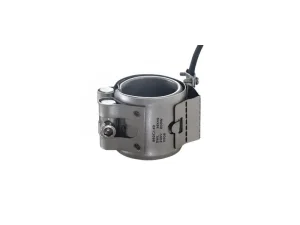



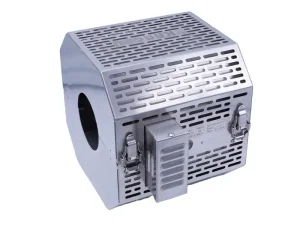

Request an Engineered Heating Consultation
Whether retrofitting existing extruder barrels or designing high-volume radiant heating tunnels, submit your technical drawings, operational temperatures, and wattage targets to our engineering team in Yancheng, China.