

Primary Engineering Lines
Precision Thermal Heating & Process Assemblies
Engineered for high watt-density precision, tight thermal tolerance, and long-lifecycle operations in heavy industry.
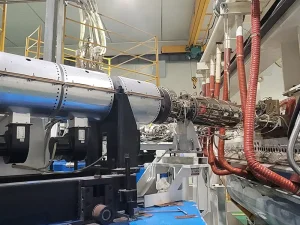
CE Certification Electromagnetic induction heater Manufacturer, Exporter
Product Details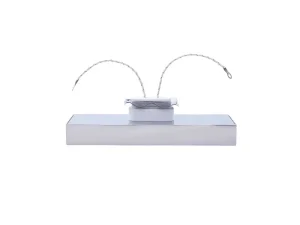
Best Infrared Ceramic Heaters for Efficient Heating Manufacturers, Exporters
Product Details
CE Certification Precise Cooling and Heating System Manufacturers, Exporters
Product Details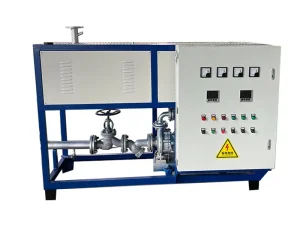
High-Quality Heat-conducting oil furnace Manufacturer, Exporter
Product Details
Best Efficient Portable Ceramic Heaters from China Suppliers - Ideal for Industrial Heating in Factories Manufacturers, Exporters
Product Details
China High density heating element Manufacturers, Factories
Product Details
CE Certification Nano infrared electric band heater Manufacturer, Manufacturers
Product Details
Thermodynamic Architectural Analysis
Engineering Differentiation: Space Heating (Convection) vs. Radiant Heating
A comprehensive physical and mechanical evaluation for process engineers, plant facility managers, and OEM system integrators.
| Physical Parameter | Convective Space Heating (Forced Air / Duct) | Radiant Heating (Infrared / Electromagnetic) | Direct Industrial Impact |
|---|---|---|---|
| Thermodynamic Mechanism | Sensible heating of atmospheric volume via thermal natural/forced convection currents. | Electromagnetic wave emission (MWIR/LWIR) exciting molecular dipoles in targets directly. | Radiant systems bypass air masses, yielding instant thermal saturation without drafting. |
| Heat Transfer Medium | Gaseous envelope (Ambient ambient air requiring air flow volume). | Zero fluid medium requirement; travels directly through vacuum and industrial atmospheres. | Eliminates duct velocity drag and dust suspension in ISO cleanrooms and paint facilities. |
| Energy Efficiency Profile | Thermal stratification creates high delta between floor and ceiling (Up to 35% thermal loss). | Targeted energy delivery with surface absorption efficiencies up to 92-98%. | Reduces total kilowatt-hour consumption across high-bay facilities and extrusion setups. |
| Dynamic Response Time | Slow to medium (Requires cyclical thermal saturation of entire localized air mass). | Instantaneous (< 1.5 seconds to nominal surface thermal radiance). | Facilitates precise PID duty cycle modulation on rapid thermoplastic extrusion lines. |
| Optimal Factory Scenarios | Sealed workshops, environmental moisture control chambers, uniform drying bins. | High-bay warehouses, plasticizing barrels, thermoforming molds, spot assembly zones. | Match equipment geometry to thermal vector requirements to maximize uptime. |
Convection Physics in Space Heaters
Industrial space heaters rely upon air circulation over resistively heated coils or ceramic matrices. Thermal energy transfers from core resistance ribbon (e.g., NiCr 80/20) into passing fluid currents. While ideal for stabilizing background ambient parameters in curing cabinets and HVAC ducting, uncontrolled air currents risk particulate contamination across pristine mold surfaces.
Radiant Electromagnetic Transfer
Industrial radiant heaters (such as Nano Infrared Electric Band Heaters) utilize targeted electromagnetic wavelengths that match the absorption spectrum of polymers, metals, and composite structures. By concentrating flux strictly on the target component (e.g., extruder barrels), external radiant casing temperatures remain low while core processing heat transfer rates spike dramatically.
Hybrid Process Integration
Advanced plants often deploy hybrid thermal topologies: using Air Duct Heaters for broad preheating combined with zoned radiant ceramic elements for critical shear points. This hybrid methodology eliminates thermal gradients across large molds and maximizes overall coefficient of performance (COP).
Industrial Cluster Infrastructure
Why Tier-1 Global Procurement Directs to Yancheng Industrial Clusters
Four decades of metallurgy refinement, vertical supply chain integration, and precision quality engineering at Kangpu Heater (Yancheng Laier Heating Technology Co., Ltd.).
Full Vertical Metallurgy Integration
Located in the epicentre of China's heating element capital, our foundry, ceramic block pressing, and mineral insulation sourcing occur within a 30km radius. This localized supply elasticity cuts lead times by 65% compared to Western manufacturers while keeping strict metallurgical consistency over nickel, mica, and casting alloys.
Certified Failure-Prevention Protocols
Every production run is executed under ISO9001 and CE conformity testing. Dielectric high-potential tests (Hi-Pot up to 1500V/0.5mA for 1 min), cold insulation resistance checks (>50MΩ at 500VDC), and radiographic verification of internal coil spacing ensure zero field short circuits and prevent costly process downtime.
5-Year Batch-Traceable Warranty
While generic trading vendors offer standard 12-month warranties, Kangpu backs engineered assemblies with a 5-year warranty backed by individual batch tracking. Our proprietary identification records specific heating wire melt batches, casting pour cycles, and operative bench assembly stamps.
Macro Solutions & Trends
Global Enterprise Solutions: Addressing Decarbonization & High-Density Automation
How multi-national procurement teams leverage custom heating architecture to satisfy ISO 50001 energy compliance.
Electrification of Industrial Steam & Oil Heating
Global decarbonization initiatives are mandating the phase-out of fossil-fuel combustion burners. Enterprises are adopting Electromagnetic Induction Steam Boilers and high-wattage Heat-conducting Oil Furnaces. Induction creates direct zero-combustion thermal excitation within seconds, slashing on-site particulate emissions and local boiler inspection overheads.
Molecular Precision in PVC-O Processing
In high-pressure pipe manufacturing, biaxial orientation demands thermal uniformity within ±1.5°C across the processing circumference. Kangpu’s patented Precise Cooling and Heating Barrel Systems and dedicated PVC-O Ovens stabilize internal crystallization, directly increasing burst pressure ratings and preventing pipe wall thickness variation.
Retrofit Economics: Nano-Infrared Upgrades
For plastics manufacturers with extensive installed lines of legacy mica or mineral band heaters, conversion to CE Certified Nano Infrared Electric Band Heaters delivers immediate energy payback. Surface radiant insulation jackets reduce barrel shell temperatures from ~280°C to under 55°C, reducing HVAC load in work cells and cutting direct kilowatt draw by 20% to 35%.
Application Engineering
Application Scenarios & Tailored Hardware Architectures
Field-proven implementations delivering thermal uniformity across mission-critical setups worldwide.
Automotive Injection Tooling
Specified with High-Density Heating Elements and Hot-runner Spring/Coil Heaters. Compact profiles paired with embedded thermocouples ensure continuous melt viscosity balance across complex 64-cavity precision automotive connector molds.
Industrial Cleanroom Process Air
Specified with CE Certification Air Duct Heaters utilizing 304/316L stainless steel finned sheaths. High volume convective space exchange prevents thermal layering while ensuring cleanroom supply air strictly complies with dynamic process temperature tolerances.
Cast Barrel Extrusion Zones
Specified with heavy-duty Cast Aluminum/Copper Heaters containing integrated liquid-cooling or air-finned channels. Provides rapid exothermic shear heat extraction while holding tight temperature stability during abrasive engineering resin compounding.
Standard Operating Procedure
Strict 7-Stage OEM/ODM Engineering Protocol
From initial CAD clearance calculations to full automated production ramp-up with guaranteed fit and thermal fidelity.
STAGE 01
ID & Clearance Design
Thermal finite element analysis (FEA), spatial mapping, fixing clamp clearance, terminal housing IP-rating, and lead wire routing optimization.
STAGE 02
Parameter Engineering
Calculation of operating watt density (W/cm²), specific target alloy selection, dual voltage taps (e.g. 230V/460V dual circuit), and insulation composition.
STAGE 03
Real-Mold Tooling
Zero reliance on hand-folded prototypes. Production-grade hard molds ensure precise bend radiuses, tight ceramic seat fits, and consistent mechanical durability.
STAGE 04
Client Dynamic Verification
Samples are dispatched directly to OEM engineering sites for dimensional fit checks, mechanical clamping verification, and machine dry-runs.
STAGE 05
Design Modification
Fine-tuning of thermocouple junction placement, terminal junction box orientation, and clamping spring tensions based on live machine testing.
STAGE 06
Full Load Stress Lab Testing
Continuous soak testing at 120% nominal voltage, verification of leak currents, insulation dielectric checks, and hot infrared thermal imaging.
STAGE 07
Mass Production & Traceability
Automated wire-winding, controlled hydraulic ceramic compaction, multi-point laser etching of serialization, and export seaworthy crating.
Technical Clarification Center
Frequently Asked Questions: Industrial Procurement & Engineering
Direct technical answers addressing watt-density calculations, radiant efficiency, and international custom orders.
What is the definitive engineering difference between Space Heaters and Radiant Heaters?
Space heaters (convective units) function by heating ambient air particles, which then circulate via natural buoyant currents or mechanical fans. They are volume-dependent and experience thermal layering (heat rising to ceiling voids). Radiant heaters emit electromagnetic infrared waves that travel unhindered through air, directly heating objects, machines, and workers upon contact. Radiant heating is up to 35% more energy-efficient in high-bay industrial settings and critical barrel surfaces where air motion causes thermal losses.
How can custom industrial heaters be ordered to exact CAD drawings?
Kangpu specializes in bespoke OEM builds. Simply provide your engineering drawings (STP, DWG, PDF), machine barrel dimensional schemas, or worn benchmark samples. Our technical department validates dimensional tolerances, internal clearance allowances, supply voltage (110V–690V), desired watt-density, mounting clamps (barrel clamp, flange, screw lock), and lead terminal styles prior to constructing tooling.
What is the maximum operating temperature comparison between Mica and Ceramic Band Heaters?
Industrial Mica band heaters are engineered for rapid thermal response and moderate temperatures up to 350°C (662°F), with maximum watt densities around 3.5–4.5 W/cm². Ceramic band heaters employ steatite ceramic interlocking knuckles backed by ceramic fiber insulation, safely operating continuously up to 700°C (1292°F) with watt densities reaching 7.0–8.5 W/cm². Ceramic is the preferred choice for high-temperature engineering polymers such as PEEK, PTFE, and high-output PVC extruders.
How does Kangpu support its 5-Year Industrial Warranty?
Our 5-year warranty is underpinned by end-to-end component traceability. Every batch manufactured is cataloged by raw alloy lot, insulation compaction density logs, and final Hi-Pot electrical QA records. In the rare event of in-service failure, our metallurgical labs evaluate the defective unit to distinguish between operational dry-cycling, mechanical barrel gap issues, or metallurgical degradation, promptly dispatching correct replacements and updating preventative tolerances.
Why choose an integrated heating and cooling barrel system over standalone heaters?
During heavy shear extrusion processing (such as rigid PVC pipe or profile extrusion), polymer friction generates severe exothermic energy, causing melt temperature overshoots. Standalone heaters can only shut down; they cannot extract heat. Kangpu's patented Precise Cooling and Heating Systems integrate cast-in liquid or blower-assisted cooling passages directly adjacent to the heating elements, maintaining critical melt processing temperatures within ±1.0°C.
Industrial Elements & Subsystems
High-Density Heating Elements & Heavy-Duty Systems
Engineered heating components, cast metal jackets, and thermal process accessories for demanding manufacturing environments.
High-Quality Portable Ceramic Heaters for Industry - Reliable Heating Solutions from China Suppliers and Factory Manufacturers, Factory
Product Details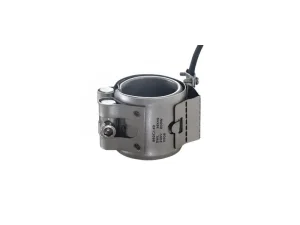
China Safe and Durable Mica Heaters Factory, Factories
Product Details
High-Quality Portable Ceramic Heaters for Industry - Efficient Heating Solutions from China Suppliers and Factory Exporter, Exporters
Product Details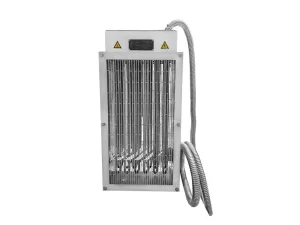
CE Certification Efficient Air Duct Heaters for HVAC Manufacturer, Factory
Product Details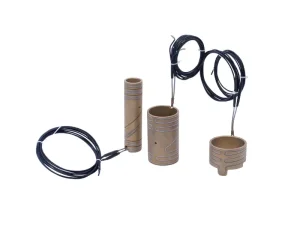
High-Quality (Hot-runner)Spring heater/Coil heater Manufacturers, Factory
Product Details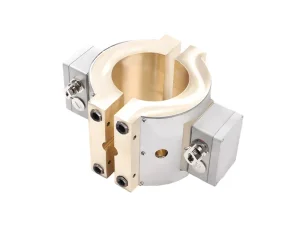
CE Certification Cast Aluminum/Copper Heater Manufacturer, Exporter
Product Details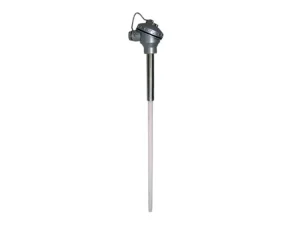
High-Quality Thermocouple Exporter, Factory
Product Details