Standard & Custom Industrial Solutions
Engineered heating assemblies designed to withstand severe thermal duty cycles and extreme mechanical stresses.




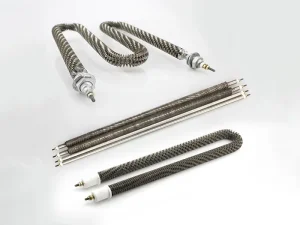
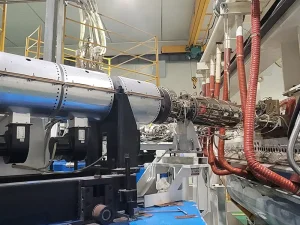
Thermal Fluid Dynamics & Complex Geometries
Overcoming thermodynamic limitations in high-stress non-planar industrial interfaces.
Void-Free Alloy Ingestion
By employing permanent-mold gravity die casting combined with vacuum degassing techniques, we eliminate internal microscopic air pockets, establishing uninterrupted thermal pathways from the nickel-chromium element to the tool face.
Multi-Axis Geometry Mapping
Complex tooling demands non-standard shapes. We engineer hyperbolic contours, compound curved platen blocks, and asymmetrical semi-cylindrical collars to conform seamlessly to intricate barrel profiles and die designs.
Integrated Dual-Circuit Cooling
For aggressive exothermic reactions, cast-in cooling tubes made of seamless stainless steel or Incoloy are routed alongside the heating elements, allowing precise bidirectional closed-loop process control within ±0.5°C.
Evolving Procurement Realities in Advanced Manufacturing
Why Tier-1 OEMs are transitioning from stock band heaters to customized cast-in components.
Engineering Out Thermal Bottlenecks
Modern engineering plastics (PEEK, PPS, fluoropolymers) require sustained barrel temperatures between 350°C and 450°C. Conventional thin-band heaters experience accelerated sheath failure, localized hot spots, and insulation degradation under continuous high-watt-density conditions. Industrial engineering teams are proactively replacing mica and traditional sheet metal elements with specialized cast-in aluminum (up to 400°C) and cast bronze/brass alloys (up to 700°C) to gain immense structural rigidity and prolonged operational lifespans.
Life-Cycle TCO Minimization
Global procurement teams prioritize total cost of ownership (TCO) over transactional unit costs. In a continuous 24/7 blown-film or automotive compounding installation, unexpected heating element failure incurs substantial downtime costs, including resin degradation, purging overhead, and discarded scrap. Precision cast-in heaters deliver extended lifespans, dampening thermal vibration and isolating internal coils from atmospheric moisture, oils, and abrasive polymer leakages.
End-to-End Vertical Supply Chain Mastery
High-precision metallurgy, real-mold testing, and rapid custom design deployment.
In-House Tooling Foundry
From initial CAD/CAM models to CNC pattern carving and alloy smelting, our vertically integrated plant controls every metallurgical variable, reducing custom tool turnaround times by 45% compared to multi-tier sourcing.
X-Ray Non-Destructive QA
Internal radiographic inspection verifies that heating element bends and cooling lines maintain uniform wall distance from external borders, preventing internal thermal drift and localized resistance drop.
Traceable Batch Casting
Every cast component is stamped with an individualized metallurgical charge and thermal inspection code, granting clients seamless digital tracking for ISO9001 and CE compliance certification.
5-Year Production Warranty
Backed by 40 years of continuous manufacturing know-how, our foundry protects key global programs with an extended 5-year guarantee against conductor breakage and dielectric breakdown.
Metallurgical Selection Guide for Custom Castings
Thermodynamic characteristics across standard production alloys.
| Alloy Classification | Max Operating Temp | Max Watt Density | Thermal Conductivity | Corrosion & Wear Profile |
|---|---|---|---|---|
| Cast Aluminum (Alloy 319 / 356) | 400°C (752°F) | 35 W/in² (5.4 W/cm²) | 160 W/m·K | Standard industrial resistance; ideal for non-corrosive polymer processing. |
| Cast Bronze (High-Leaded / Phosphor) | 650°C (1200°F) | 65 W/in² (10.0 W/cm²) | 60 - 80 W/m·K | High mechanical strength, resistance to chemical attack and shear load. |
| Cast Brass (Yellow / High Tensile) | 550°C (1022°F) | 50 W/in² (7.7 W/cm²) | 115 W/m·K | Balanced thermal expansion; stable across elevated thermal ramp cycles. |
| Cast Ductile Iron / Steel Shell | 700°C (1292°F) | 30 W/in² (4.6 W/cm²) | 45 W/m·K | Maximum resistance to abrasive wear, heavy impact, and aggressive gases. |
High-Precision Applications by Sector
Custom geometries tailored to demanding process specifications.
Twin-Screw Extrusion Barrels
Figure-8 bores and interlocking horseshoe shapes designed to wrap dual-barrel cylinders smoothly, maintaining thermal balance along each zone while accommodating pressure-transducer taps and thermocouple ports.
Semiconductor Die Bonding Platens
Ultra-flat, CNC-surface-ground cast aluminum heating platens delivering ±1°C surface temperature uniformity for wafer curing, thermo-compression bonding, and cleanroom vacuum packaging.
Blown-Film Extrusion Dies
Circular segmented annular rings engineered with precision tapers, cast-in cooling pathways, and matched thermal expansion tolerances to eliminate gauge variation during high-throughput film production.
Aseptic Food & Pharma Sealing
Washdown-grade, hermetically sealed bronze casting configurations designed with sanitary terminal boxes to ensure continuous processing without moisture ingress during intensive CIP (Clean-In-Place) procedures.
Composite Aerospace Autoclaves
Contoured, high-strength brass-alloy heaters embedded into curved aerospace forming mandrels, guaranteeing stable heat profiles across variable tooling cross-sections during carbon-fiber resin curing cycles.
Hot-Melt Adhesives & Laminating
Precision-cast manifolds featuring integrated fluid pathways and cast-in tubular heating circuits that eliminate cold-spots along hot-melt dispense rails and wide-web roll laminators.
Frequently Asked Questions
Engineering and purchasing insights for custom cast-in heating elements.
What are the key benefits of cast-in heaters over standard mica or ceramic band heaters?
Cast-in heaters embed high-grade tubular heating elements within a dense, conductive metal matrix (aluminum, brass, bronze, or iron). This design provides several distinct advantages: first, it eliminates direct exposure of the heating element to ambient air and external contamination. Second, it delivers superior heat transfer through solid conduction rather than radiation, eliminating hot spots. Third, it provides substantial structural rigidity that can endure extreme vibration, melt-polymer pressure, and impact. Finally, it allows integrated liquid or air cooling pathways within the casting, which is impossible with standard sheet-metal band heaters.
When should an engineer specify cast bronze instead of cast aluminum?
The primary deciding factors are continuous operating temperature and mechanical wear. Cast aluminum alloys have an upper continuous limit of approximately 400°C (752°F). Above this threshold, aluminum softens and experiences creep deformation. Cast bronze and brass alloys can operate continuously at temperatures up to 650°C (1200°F), making them essential for processing engineering resins such as PEEK, fluoropolymers, and polysulfones. Bronze also exhibits superior resistance to corrosive off-gassing and mechanical abrasion in harsh production environments.
How does your factory ensure casting integrity and prevent internal voids around heating coils?
We use vacuum-assisted casting alongside temperature-controlled permanent metal molds. Prior to pouring, the molten alloy undergoes rotary degassing to remove dissolved hydrogen. The internal heating elements are secured via precision fixtures to maintain precise clearance from mold walls. After casting, every component undergoes X-ray radiographic inspection to verify complete metal consolidation and uniform wall thickness around both heating elements and cooling lines.
Can Kangpu fabricate cast-in heaters matching non-circular or proprietary profiles?
Yes. Custom geometry casting is our core competency. We produce flat, rectangular, hyperbolic, L-shaped, slotted, and multi-segment interlocking barrel heaters. Simply provide your 3D CAD files (.STEP, .IGES, or native SolidWorks), or send a physical component or sample. Our engineering team will perform thermal simulation, design the mold pattern, verify clamping geometry, and machine all necessary cutouts for thermocouples, sensors, and mounting bolts.
What cooling methods are available for cast-in barrel systems?
We offer both liquid-cooled and air-cooled designs. Liquid-cooled heaters feature seamless stainless steel or Incoloy tubing cast directly beside the heating elements, with flared fittings or NPT threads for water or thermal oil circulation. Air-cooled cast heaters feature cast-in exterior radial or longitudinal fins, designed to integrate with custom stainless-steel blower shrouds for controlled, forced-air convective cooling without thermal shock.
Precision Assemblies & Specialized Equipment
Continuous thermal solutions for global machinery manufacturers and production lines.