
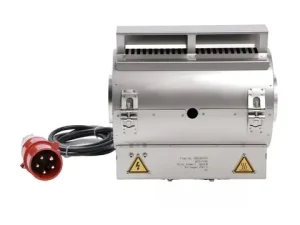
CE Certification Precise Cooling and Heating System for Osaka Processing Plants
View System Specs
Engineered for Japanese OEM integration and precision barrel temperature management in accordance with CE Low Voltage Directive 2014/35/EU and EMC 2014/30/EU.
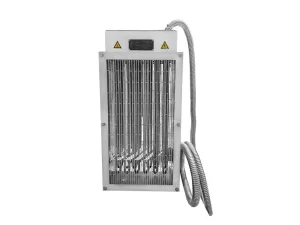
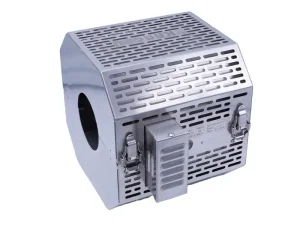
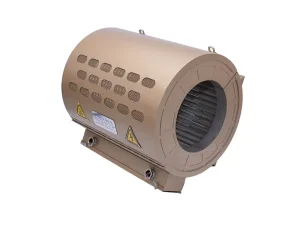
Strategic thermal engineering requirements across Sakai, Higashiosaka, and the Osaka Bay chemical cluster.
The Greater Osaka metropolitan area, anchoring the historical Hanshin Industrial Belt, represents one of East Asia’s most sophisticated industrial powerhouses. Unlike regions dominated purely by consumer assembly, Osaka's manufacturing ecosystem is defined by high-precision mechanical engineering, polymer and functional plastic synthesis, advanced pharmaceutical manufacturing, and semiconductor substrate handling. As Japanese machine manufacturers (OEMs) expand their international export corridors, factory equipment deployed within Osaka must meet strict dual-jurisdiction standards: maintaining compatibility with Japan's rigorous domestic electrical safety codes (including JIS and the Electrical Appliance and Material Safety Act - PSE), while fully conforming to the European Union’s CE mark requirements to enable frictionless global shipping.
In Higashiosaka—internationally recognized for its high-density cluster of micro-precision metalworking and small-to-midscale specialized tooling enterprises—the demand for custom electric heaters has shifted radically from commoditized heating coils to high-watt-density, tight-tolerance thermal elements. Whether powering twin-screw compounders running engineering resins (such as PEEK, PTFE, and liquid-crystal polymers) or supporting precision thermal drying tunnels, industrial heating components must deliver absolute temperature uniformity. A surface variance of merely ±2°C across a cast-aluminum barrel sleeve can trigger viscosity degradation, molecular shearing, or wall-thickness inconsistency in high-speed extrusion lines.
Explosion-proof flanged immersion elements and heavy-duty pipeline heaters operating under ATEX/IECEx and CE directives for continuous bitumen, chemical feedstock, and synthetic resin batching.
Micro-dimensioned mica and ceramic band heaters engineered for ultra-fast thermal ramp-up and minimal physical footprint on rapid injection molding and hot runner tooling.
With Kansai Electric Power industrial rate adjustments, plants are swapping legacy exposed heating coils for aerogel-insulated Nano-Infrared band assemblies, cutting radiated losses by 30% to 45%.
Overcoming the tri-fold challenges of supply chain resilience, carbon neutrality, and international regulatory cross-certification.
Multinational plant operators headquartered in Osaka, Frankfurt, or Chicago are increasingly moving away from layered trading networks in favor of direct engineering partnerships with verified heater manufacturers. The rationale is direct: specialized thermal elements operate under extreme cyclic thermal fatigue (ranging from ambient up to 650°C), continuous vibration, and potential chemical exposure. Sourcing through non-technical intermediaries introduces severe specification gaps regarding sheath metallurgy (e.g., Incoloy 800 vs. SS304), internal MGO dielectric compaction density, and ceramic purity ratings.
By maintaining in-house mold tooling, CNC casting foundries, automated resistance wire winding, and high-voltage dielectric isolation testing facilities, our manufacturing infrastructure provides engineering buyers with transparent material tracing certificates (EN 10204 Type 3.1), finite element thermal analysis, and direct customization of clamping mechanisms (such as wedge locks, barrel springs, or flange joints) optimized specifically for Japanese, European, and American processing equipment.
Forward-looking thermal transfer technologies bridging 2026 industrial requirements and smart-factory IoT.
Implementing aerospace-grade multi-layer ceramic reflective matrices directly onto band exteriors. Minimizes ambient heat radiation to plant operators while directing over 90% of infrared photon energy directly into the barrel core.
Transitioning from clumsy external spring-loaded thermocouples to embedded micro-RTD and Type K sensors directly bonded inside the cast alloy substrate. Delivers millisecond-response feedback directly into PLC PID loops.
Eliminating thermal resistance barriers entirely by inducing eddy currents directly inside the steel barrel shell. Eliminates consumable heating wires and delivers instantaneous response curves for precision PVC-O and optical film processing.
Rigorous verification procedures aligned with international electrotechnical safety protocols.
Deploying industrial heating elements in Osaka or exporting Japanese equipment to Europe demands rigorous compliance with harmonized international standards. Kangpu Heater executes a strict seven-stage quality verification workflow covering 100% of production runs:
Comprehensive portfolio of specialized heating systems ready for direct deployment in Osaka factories and international export machinery.



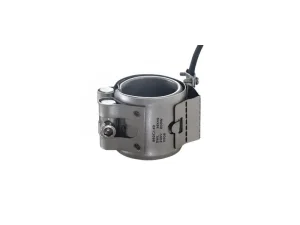


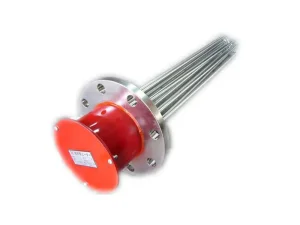

Direct engineering answers addressing regulatory compliance, electrical compatibility, and custom fabrication.
The Kansai electrical grid in Western Japan (including Osaka) operates predominantly at 200V (3-phase, 60Hz), in contrast to Eastern Japan (50Hz) and European industrial grids (380V–415V, 50Hz). As an original equipment manufacturer, we calculate the internal nickel-chromium (Ni80Cr20) resistance coil cross-section and winding pitch specifically for your targeted voltage input. For export machinery destined for Europe or North America, we engineer dual-voltage or star-delta wiring layouts with high-temperature terminal blocks, allowing Japanese OEMs to build universally compatible systems without changing heater core geometry.
Every dispatch of Kangpu industrial heaters is accompanied by a complete technical dossier. This includes CE Declarations of Conformity (DoC) referencing the Low Voltage Directive 2014/35/EU and EMC Directive 2014/30/EU, RoHS 3 material compliance certificates, factory electrical test reports (insulation resistance and high-pot dielectric withstand), and certified dimensional drawings with thermal gradient data.
Yes. A primary segment of our Osaka business is the replacement and upgrading of worn OEM band heaters, cast-in heaters, and nozzle elements. You simply supply us with the physical dimensions (inner diameter, axial length, clamping style), wattage rating, voltage, and terminal configuration (lead wire, euro-plug, or ceramic terminal box). Our engineering team will produce an approval drawing within 24 hours to guarantee direct mechanical fit.
Cast aluminum heaters offer exceptional thermal conductivity and a maximum continuous operating temperature of 350°C to 400°C, making them the standard choice for polyolefins, PVC, and general plastics extrusion. Cast copper (or cast bronze) elements feature higher mechanical strength, superior corrosion resistance, and can continuously operate at 650°C to 700°C. They are specifically recommended for engineering polymers with high melting points such as PEEK, fluoropolymers, and heavy metal die-casting runners.
Each Kangpu heater carries an indelible laser-engraved serial number identifying its raw material batch, winding operative, and final quality control sign-off. In the rare event of premature dielectric failure or open circuit during normal operating conditions within 5 years, we initiate root-cause metallurgical and electrical reviews. Replacement components are expedited directly to your plant or job site to guarantee zero extended line downtime.