
Engineered Heating Core: High-Capacity Oil Furnaces & Generators
Precision-manufactured in our ISO 9001 certified facility, calibrated for seamless integration with German industrial heat exchangers, extruders, and chemical reactors.
-
 Explore Oil Furnace System
High-Quality Heat-conducting Oil Furnace for German Heavy Processing
Operational up to 350°C at atmospheric operating pressures, featuring closed-loop nitrogen blanket capabilities and multi-zone PID loops.
-
 Explore Cleaning Furnace
High-Quality Industrial Cleaning Furnace for Polymer Die De-polymerization
Thermal vacuum pyrolysis cleaning for plastic extruder screws, spinnerets, and injection tooling with zero mechanical abrasion.
-
 Explore Induction Boilers
High-Quality Electromagnetic Steam Boiler for Clean Steam Generation
Instantaneous induction vapor generation with >98% thermal efficiency, fully eliminating on-site carbon combustion and flue-gas ducting.
-
 Explore Mica Heaters
Safe and Durable Mica Band Heaters for High-Precision Extruder Zones
Precision nickel-chromium winding embedded in high-grade dielectric phlogopite mica, engineered to withstand aggressive cycling.
Decarbonization, EnEffG Mandates, & The Thermal Fluid Transformation in Germany
Germany’s industrial backbone faces unprecedented regulatory pressure under the Energieeffizienzgesetz (EnEffG) and rising CO2 emissions trading costs. High-precision electric heat-conducting oil systems provide the definitive bridge to total plant electrification.
The German Federal Republic's energy transformation—the Energiewende—has entered its most critical phase: the thorough defossilization of medium-to-high temperature industrial process heat. Historically, German processing plants located across North Rhine-Westphalia, Bavaria, and Baden-Württemberg depended heavily on piped natural gas or centralized fossil-fired boiler houses. Today, escalating European Union Emissions Trading System (EU ETS) certificate costs, national fuel emissions trading laws (BEHG), and mandatory corporate energy management systems under ISO 50001 dictate an urgent transition to decentralized, electrically driven heat transfer oil furnaces (Elektrische Thermalölerhitzer).
Electric heat-conducting oil furnaces (thermal fluid units) operate on closed circulatory loops where synthetic or mineral thermal fluids transfer heat up to 350°C under virtually pressureless conditions (typically below 0.6 MPa, primarily derived from circulation pump head pressure). This eliminates the exorbitant capital expenditures, water treatment chemicals, licensed boiler operator requirements, and severe explosion hazards tied to high-pressure steam boilers governed by German BetrSichV (Betriebssicherheitsverordnung).
Zero Direct Scope 1 Emissions
By switching to electrical thermal oil circulation heaters powered by renewable power contracts (PPAs), German factories completely eradicate on-site carbon combustion, aligning directly with Germany's 2045 Climate Neutrality roadmap.
Superior Exergy & Thermal Uniformity
Thermal fluid circuits prevent localized hot spots. Unlike direct combustion flame impingement which causes thermal cracking of synthetic fluids, our low-watt-density heating bundles guarantee fluid longevity and heat surface consistency.
Compliance with DIN 4754 Norms
Engineered systematically according to DIN 4754 (Heat transfer installations operating with organic heat transfer fluids), incorporating safety relief valves, nitrogen sealing covers, flow failure trip monitors, and level limit interlocks.
Where Kangpu Oil Furnaces Drive German Industrial Operations
From the plastics engineering centers of Bavaria to the chemical clusters of the Rhine-Ruhr and the automotive tooling hubs of Stuttgart, our skid-mounted oil heating solutions empower demanding production lines.
1. High-Performance Plastics & Polymer Extrusion
German extruder manufacturers (OEMs) in Troisdorf, Nuremberg, and Bad Oeynhausen require exceptionally stable barrel and die temperature controls. Our electric oil circulation systems interface with double-walled extruder jackets and internal screw cores, maintaining resin melts (such as PEEK, PA66, and fluoropolymers) within ±0.5°C to avoid polymer shear degradation and ensure continuous dimensional accuracy for critical medical tubing and automotive profiles.
- Closed-loop heating and cooling combinations with plate heat exchangers.
- Elimination of cold-start screw stall through gradual programmable heat-soak ramps.
- Integration with industrial PLC platforms via Profinet and OPC UA protocols.
2. Chemical Synthesis & Pharmaceutical Reactors
In the chemical valleys of Leverkusen, Ludwigshafen, and Frankfurt-Höchst, jacketed chemical reactors demand versatile heating and cooling cycles. Our thermal oil units operate across broad temperature spans (-20°C to +320°C using specialized silicone or synthetic aromatic heat-transfer fluids), enabling automated phase-transition control during exothermic polymerization and active pharmaceutical ingredient (API) crystallization.
- Explosion-proof architectures compliant with ATEX Directive 2014/34/EU (Zone 1 / Zone 2).
- Hermetically sealed magnetic-drive canned motor pumps preventing any volatile fluid leakage.
- Redundant high-limit safety cutoffs with independent PT100 sensors.
3. Composite Autoclaves, Tooling & Lamination Presses
Supplying the southern German automotive and aerospace supplier network (Ingolstadt, Stuttgart, Munich), our thermal oil systems deliver uniform caloric distribution across large-format platen presses. Whether manufacturing lightweight carbon-fiber reinforced polymer (CFRP) structural body panels or multilayer printed circuit boards, identical surface temperature distribution is paramount to preventing warping or delamination.
- Multi-circuit manifolds with proportional balancing valves for platen zone parity.
- Dynamic cooling loops with automated secondary water-glycol heat exchangers.
- Compact skid design fitting smoothly under standard factory mezzanine floors.
4. Food, Beverage & Sustainable Packaging Processing
Operating within strict IFS Food and FDA guidelines across Lower Saxony and Bavaria, our heating systems utilize non-toxic, food-grade thermal fluids (NSF HT-1 certified). From continuous edible oil frying and baking tunnels to PET preform thermoforming and solvent-free flexible packaging converting lines, our equipment delivers zero soot, zero odor, and total hygienic isolation.
- Full stainless steel (AISI 304 / 316L) piping manifolds and enclosure options.
- IP65-rated control cabinets resistant to high-pressure washdown routines.
- Integrated predictive expansion tank venting with nitrogen inerting.
Thermodynamic & Operational Cost Comparison for German Facilities
A detailed technical evaluation demonstrating why engineering directors are swapping legacy gas burners and high-pressure steam networks for decentralized electric thermal fluid circulation.
| Evaluation Parameter | Kangpu Electric Thermal Oil Furnaces | Conventional High-Pressure Steam | Direct Gas-Fired Thermal Heaters |
|---|---|---|---|
| Operating Pressure at 300°C | Low System Pressure (< 0.6 MPa pump pressure) | Extreme High Pressure (> 8.5 MPa saturation) | Low System Pressure (< 0.6 MPa pump pressure) |
| Thermal Efficiency | > 98.5% (Direct immersion transfer) | 55% - 70% (Blowdown & condensate losses) | 75% - 84% (Flue-gas exhaust losses) |
| German Regulatory Burden | Simplified (DIN 4754, low inspection class) | Stringent (BetrSichV, TÜV continuous audits) | BImSchG emissions compliance & flue testing |
| Zone Temperature Accuracy | Precision PID regulation: ±0.5°C | Pressure dependent: ±3.0°C to ±5.0°C | Burner cycling hysteresis: ±4.0°C to ±8.0°C |
| Carbon Taxation (EU ETS / BEHG) | Zero Scope 1 emissions (100% Electrified) | Heavy ongoing carbon tax penalties | Vulnerable to natural gas carbon price surges |
| Corrosion & Scale Risk | Zero corrosion (Non-aqueous organic liquid) | High risk (Pitting, deaeration chemical cost) | Zero internal corrosion (Fluid dependent) |
| Floor Space & Infrastructure | Compact, skid-mounted next to machine | Requires dedicated external boiler building | Requires gas line, chimney stack, fire separation |
Kangpu / Yancheng Laier: 40 Years of Industrial Thermal Excellence
Headquartered in the advanced equipment manufacturing hub of Yancheng, Jiangsu, our integrated production base combines German-standard engineering precision with China’s unmatched supply chain agility.
Founded in 1986, Yancheng Laier Heating Technology Co., Ltd. (brand: Kangpu Heater) has spent four decades focusing strictly on industrial electric heating elements, advanced fluid furnaces, and precise heating-cooling systems. While European equipment lead times often stretch to 36–52 weeks due to localized supply chain bottlenecks, our vertically integrated plant controls every manufacturing phase—from raw alloy ingot drawing to CNC bending, orbital TIG pressure vessel welding, and multi-stage hydrostatic testing.
Tier-1 Component Metallurgy
Our tubular heating bundles use high-grade Incoloy 800/840 or 316Ti stainless steel sheaths compacted with ultra-pure electro-fused magnesium oxide (MgO) powder sourced from verified supply tiers, ensuring insulation resistance >500 MΩ even under peak thermal saturation.
Unmatched Production Agility
With multi-axis CNC laser cutting, automated tube-to-tubesheet orbital welding stations, and an on-site mold workshop, we manufacture custom-engineered skid units in 4 to 6 weeks. Fast prototype sampling takes just 7 to 10 days for custom barrel band heaters.
Industry-Leading 5-Year Warranty
Every single oil furnace and heating subassembly is linked to a permanent digital batch identification record. We provide an unprecedented 5-year warranty on core structural heating bundles, supported by non-destructive radiographic testing (RT) of all pressure-retaining seams.
Need a Custom Technical Quotation for Germany?
Our bilingual thermal design engineers will review your CAD drawings, process flow diagrams (P&ID), and electrical specifications within 24 hours.
Technical Roadmap: Smart Thermal Control & Industry 4.0 Integration
Modern German industrial manufacturing demands intelligent equipment capable of autonomous process adaptation, real-time telemetry, and preventative maintenance.
Kangpu’s technological roadmap aligns directly with the standards established by the German Plattform Industrie 4.0 initiative. Thermal oil furnaces are no longer isolated black-box heating units; they function as intelligent cyber-physical systems integrated directly into factory-wide SCADA and MES architectures.
Native OPC UA & Profinet Communications
Our control panels feature Siemens S7-1500 or Beckhoff embedded controllers. Native OPC UA servers provide encrypted process value transmission (flow velocity, film temperature, pump vibration) straight into plant-wide Siemens TIA Portal networks.
Predictive HTF Degradation Monitoring
Thermal fluid degradation (coking and viscosity loss) causes costly tube fouling. Our integrated sensing suites continuously monitor fluid dielectric constants and pressure differential fluctuations across filtration units, alerting maintenance teams weeks before thermal cracking occurs.
Hybrid Thermal Storage & Peak Shaving
In response to volatile spot-market electricity pricing (EPEX Spot Germany), we are deploying hybrid molten-salt/thermal-oil buffer tanks that absorb surplus renewable grid power during negative-pricing windows and discharge heat steadily during peak tariff intervals.
Compliance, Inspection & Direct Logistics to Germany
Importing industrial process machinery into Germany requires uncompromising regulatory validation. We deliver full turnkey engineering documentation complying with all applicable European directives.
Full CE, PED 2014/68/EU & AD 2000 Conformance
All pressurized components, heat exchangers, and expansion tanks are engineered in accordance with the European Pressure Equipment Directive (PED 2014/68/EU Module H/H1) and relevant AD 2000-Merkblätter calculations.
- Full TÜV-witnessed hydrostatic pressure test certificates and material test reports (EN 10204 3.1).
- Low Voltage Directive (2014/35/EU) and EMC Directive (2014/30/EU) compliance.
- Complete German-language operating manuals (Betriebsanleitung) including EPLAN schematics and risk assessments (EN ISO 12100).
Streamlined Logistics & Spare Parts Lifeline
We manage reliable Door-to-Door (DDP) multimodal logistics into Germany’s major economic hubs—including bonded customs clearance through Frankfurt Airport (air freight) and the ports of Hamburg and Rotterdam (ocean freight).
- Emergency critical spares dispatch (heating elements, seals, magnetic pump cartridges) within 24 to 48 hours.
- Standardized electrical switchgear using globally accessible components (Siemens, Schneider, ABB, Phoenix Contact).
- Remote diagnostics via secure VPN gateways for instantaneous real-time engineering support.
Complete Thermal Engineering Catalog for Machine Builders
Discover our broader lineup of explosion-proof circulation heaters, industrial fans, convection ovens, flexible ceramic bands, and advanced pipeline heaters.
-
 Explore Explosion-Proof Units
CE Certified Explosion-Proof Electric Heater for Volatile Zones
ATEX / IECEx certified terminal enclosures engineered for flammable fluid and gas heating across hazardous Zone 1 and Zone 2 environments.
-
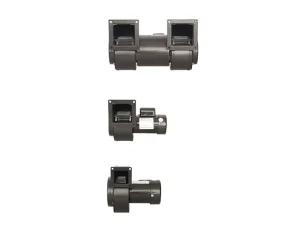 Explore Industrial Fans
CE Certified High-Temp Industrial Blowers & Cooling Fans
Dynamically balanced industrial air movement systems optimized for forced-air cooling jackets and thermal oven exhaust ducts.
-
 Explore Industrial Ovens
CE Certified Industrial Curing, Annealing & Drying Ovens
Precision thermal treatment enclosures featuring forced laminar convection for composite curing, PTFE sintering, and stress relief.
-
 Explore Portable Ceramic Units
Portable Industrial Ceramic Heaters for Site & Tool Preheating
Rugged ceramic element arrays designed for targeted localized preheating, mold pre-treatment, and rapid maintenance interventions.
-
Explore Ceramic Systems
High-Precision Industrial Ceramic Temperature Control Heaters
High-density steatite ceramic knuckle assemblies providing superior dielectric strength and continuous heat transfer up to 700°C.
-
 Explore Integrated Systems
Integrated Heating/Cooling Barrel Systems for Extruders
Cast-in aluminum/copper dual-zone thermal jackets delivering rapid heating paired with liquid cooling or air cooling blowers.
-
 Explore Induction Heaters
CE Electromagnetic Induction Barrel Heater for Energy Retrofits
Induction barrel warming converting high-frequency magnetic energy directly into internal cylinder heat, cutting energy losses by 30-40%.
-
 Explore Pipeline Heaters
Heavy-Duty Flanged In-Line Pipeline Heaters for Thermal Fluids
Direct in-line circulation fluid vessels engineered with baffled flow passages to maximize convective heat transfer without dead zones.
Frequently Asked Questions: Industrial Oil Furnaces for Germany
Detailed answers addressing engineering validation, compliance mandates, fluid mechanics, and supply chain questions for German plant operators and procurement leaders.
How do Kangpu electric oil furnaces comply with German DIN 4754 standards?
Our thermal oil heating systems are built strictly to DIN 4754-1 and DIN 4754-2 standards governing organic heat transfer fluid installations. We incorporate mandatory safety redundancies: automatic flow interlocks that trip the heating bundle if fluid velocity drops below critical film boundary speeds (preventing fluid overcooking), dual independent over-temperature limiters (PT100/Type K), expansion vessel level monitors, and nitrogen inerting valves to prevent fluid oxidation at elevated temperatures.
Can Kangpu customize electrical enclosures and voltage configurations for Germany?
Yes. All units destined for Germany are manufactured for standard European low-voltage three-phase grids (400V 3-phase, 50Hz, TN-S or TN-C-S grounding). We can also configure systems for 690V industrial grids common in chemical plants. Electrical cabinets follow DIN EN 60204-1 safety standards, featuring Siemens or Schneider components, IP54 or IP65 ingress protection, segregated high-voltage/low-voltage cabling, and clear German-language terminal labeling.
What is the difference between direct watt density and fluid film degradation?
Thermal fluids have maximum film temperature limits (typically 30°C to 40°C above bulk fluid temperature). If a heater’s surface watt density is sized too aggressively, the boundary oil layer cracks thermally, causing carbon deposits (coke) on element sheaths, which leads to insulation burnout. Kangpu specifically engineers watt densities between 1.5 W/cm² and 2.5 W/cm² depending on the specific heat transfer fluid (e.g., Marlotherm, Therminol, or Diphyl), ensuring long fluid lifespan and zero coking.
How does Kangpu support factory testing, inspection, and verification before shipment?
We execute strict Factory Acceptance Testing (FAT) on every system. This includes helium leak detection, hydrostatic pressure tests at 1.5x design pressure, insulation resistance tests under wet conditions, and complete electrical functional simulation. German clients can either appoint third-party inspection agencies (such as TÜV Rheinland, SGS, or Bureau Veritas) to inspect units at our Yancheng facility or participate in real-time interactive high-definition video FAT audits.
What warranty protection and long-term spare parts support do you provide?
We offer an industry-leading 5-year after-sales warranty on our core electric heating bundles and pressure vessels. All wearable components (mechanical shaft seals, magnetic pump couplings, contactors, and temperature sensors) use internationally standardized specifications. Replacement items can be sourced directly from local German distributors or delivered via express courier from our factory within 48 to 72 hours.
Ready to Optimize Your Process Heating Efficiency?
Contact our thermal systems team today to review your machine requirements, calculate energy savings, and request an engineered quotation.